
Learn More About LED Facial Masks: The Future of Skincare with 3D Red Light Therapy Masks
30-Second Summary:
A 3D red light therapy mask is a flexible silicone LED mask that contours to the face for full, multi-angle coverage — typically with 100–240 LEDs depending on the model. The key wavelengths: red ~630–660 nm (most studied for collagen and wrinkle research), near-infrared ~810–850 nm (deeper penetration, circulation and repair research), blue ~415 nm (the acne-bacteria research band — note that ~460–470 nm “blue” lacks that evidence), and yellow ~590 nm (soothing claims exist but the evidence base is limited). Typical masks offer anti-acne, soothing, and repairing modes that combine channels. Usage: clean skin, optional serum, 10–20 minutes per session, 3–5 times weekly; improvement timelines vary by concern — published protocols commonly run 8–12+ weeks for collagen endpoints, so consistency matters more than any single session. Safety: many models are FDA 510(k)-cleared or sold as general wellness devices (registration ≠ clearance); protect eyes, avoid use with photosensitizing medications or active photosensitive conditions, and consult a clinician if pregnant or on retinoids.
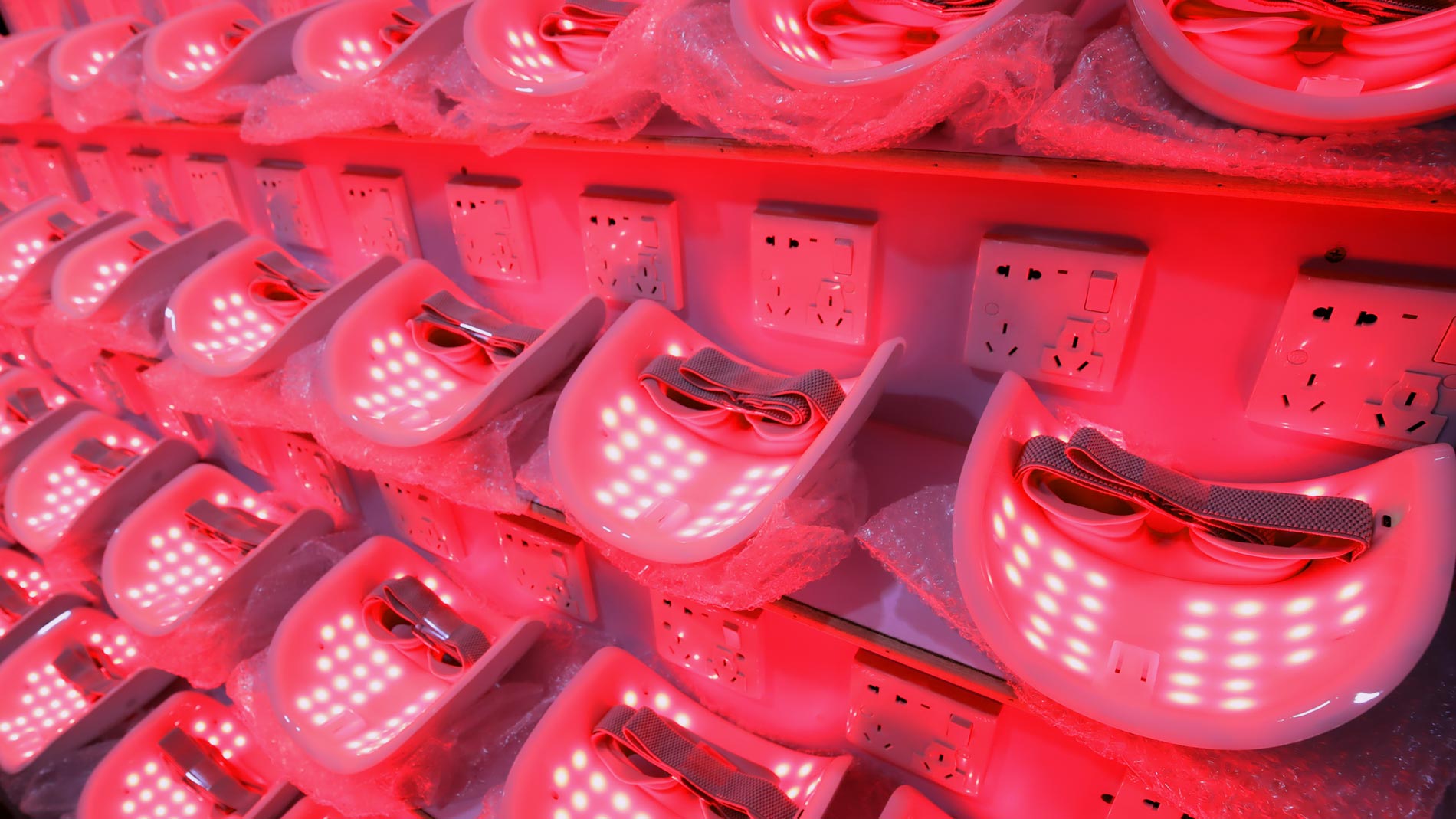
Table of Contents
- 1. What Are LED Facial Masks?
- 2. Why Choose a 3D Red Light Therapy Mask?
- 3. How Does LED Light Therapy Work?
- 4. Modes and Functions of 3D LED Facial Masks
- 5. Real-World Results and What to Expect
- 6. How to Use Your LED Facial Mask for Best Results
- 7. Safety and Precautions
Full-Face Light Therapy, Without the Rigid Shell
In recent years, LED facial masks have become a popular skincare category, offering a non-invasive, drug-free, and convenient way to address concerns such as aging, acne, redness, and uneven tone. Among the newer formats is the 3D red light therapy mask — a flexible silicone device designed for full-face, multi-dimensional LED coverage. This guide explains how these masks work, what the wavelengths do, and how to use them realistically. (Basics first: the ultimate LED mask guide.)
1. What Are LED Facial Masks?
LED facial masks use light-emitting diodes to deliver specific wavelengths of light to the skin. The color of light determines which skin responses are being studied or targeted:
- Red light (~630–660 nm): the band most associated with collagen-support research; commonly used for fine-line and firmness concerns.
- Blue light (~415 nm): the band studied against acne-associated bacteria; commonly used for breakout-prone skin.
- Yellow light (~590 nm): marketed for soothing redness — evidence is more limited than red/NIR; treat claims accordingly.
- Near-infrared light (~810–850 nm): penetrates deeper; associated with circulation and repair research.
2. Why Choose a 3D Red Light Therapy Mask?
Unlike flat or rigid masks, the 3D red light therapy mask uses flexible silicone that contours to the face, supporting comprehensive coverage and more uniform light distribution across curved areas (cheeks, jawline, under-eye zones). Models commonly carry 100–240 LEDs (model-dependent) arranged to reach facial contours from multiple angles. (Form-factor comparison: silicone vs hard-shell.)
Typical benefits users and published research associate with consistent use:
- Support for collagen-related research endpoints (skin firmness, elasticity).
- Fine lines and wrinkles — improvements reported in published trials, with individual variation.
- Improved skin firmness and elasticity with consistent use.
- Microcirculation support associated with red/NIR exposure.
- May help fade hyperpigmentation over time — results vary.
- Lightweight and comfortable — often under 200 g.
- Hands-free operation with multiple modes for different skin needs.
3. How Does LED Light Therapy Work?
LED light therapy delivers wavelengths that interact with skin cells. The practical picture by band:
- Red light (630–660 nm): reaches the dermis where fibroblasts (collagen-producing cells) live; most of the wrinkle/texture research uses this band.
- Blue light: the acne-relevant band is around ~415 nm, matching the porphyrins produced by acne-associated bacteria. Devices advertising “blue” at ~460–470 nm are using display-blue — there is no equivalent acne evidence for that range. (Wavelengths explained: which LED light is best for acne)
- Yellow light (~590 nm): marketed to calm sensitive or reddened skin — the evidence base is limited; a supporting-channel role is the honest framing.
- Near-infrared light (810–850 nm): the deepest-reaching band in typical home devices, associated with circulation and repair research.
Published studies typically run 8–12+ weeks of consistent use before reporting skin-texture, tone, or collagen endpoints — “visible improvement in 4–8 weeks” varies widely by concern, device, and individual.
4. Modes and Functions of 3D LED Facial Masks
Modern 3D LED masks typically offer several modes that combine channels for different skin concerns:
- Anti-acne mode: combines blue (~415 nm) with red and NIR — blue is the acne-research band, red/NIR support calming and repair.
- Soothing mode: yellow + red + NIR for sensitive or irritated skin — yellow here is a support channel with limited evidence.
- Repairing mode: red + NIR focus for dull-skin and collagen-support goals.
This versatility makes 3D LED masks usable across a wide range of skin types and goals. (Mode walkthrough: how to use a 7-color LED mask.)
5. Real-World Results and What to Expect
What people typically report with consistent use (and what the research describes):
- Smoother, firmer-feeling skin and reduced fine lines — typical of published red-light protocols.
- Fewer active breakouts with blue-light use — the ~415 nm band is the acne-research standard.
- Fading of dark spots and more even tone — gradual, and individual results vary.
- Improved skin glow — the subjective endpoint users notice first.
LED masks are widely used in dermatology settings as an adjunctive, at-home tool. Realistic expectation: consistency over weeks, not a single-session miracle. (Honest overview: safe and effective usage — can you overuse?)
6. How to Use Your LED Facial Mask for Best Results
- Cleanse your face thoroughly to remove makeup and impurities.
- Apply a serum or moisturizer if you wish — light penetrates clean or product-free skin fine; avoid thick occlusives.
- Wear the mask comfortably, adjusting straps as needed.
- Select the appropriate mode for your skin concern.
- Relax for 10–20 minutes per session (follow the manufacturer’s timer).
- Use the mask 3–5 times per week — consistency beats marathon sessions. (Session guidance: optimal session duration; routine: step-by-step mask routine.)
7. Safety and Precautions
Many LED masks are FDA 510(k)-cleared for specific indications, while others are sold as general wellness devices — check your device’s status, and note that FDA registration is not the same as clearance. LED light therapy is generally considered low-risk for most skin types, but:
- Avoid use if you have a photosensitive disorder or take photosensitizing medications (including isotretinoin/accutane).
- Pregnant or breastfeeding women should consult a healthcare provider before use.
- Do a patch/sensitivity test before your first full treatment.
- Protect your eyes — use masks with built-in eye shielding, or wear the provided eye protection. (eye protection standards)
- If using retinoids, space them from LED sessions to avoid irritation overlap.
Transform Your Skincare Routine?
The 3D red light therapy mask is a standout option for at-home light therapy — flexible fit, full-face coverage, and multi-wavelength modes. If you are a brand or retailer looking to source these masks, Rainbow (R&S) offers OEM/ODM manufacturing for flexible silicone masks with your choice of wavelength stacks — view the lineup or contact us for details.

