
Results Don’t Lie—The Data Behind the Glow
The five benefits with the strongest support are: (1) collagen & wrinkle reduction — confirmed by randomized trials measuring intradermal collagen[1][2]; (2) acne clearance when blue 415 nm is added to red — 76% reduction in inflammatory lesions in the landmark trial[4]; (3) a healthier, calmer skin tone via anti-inflammatory and microcirculation effects[6]; (4) zero-UV, non-ionizing safety when the device meets its exposure specifications[7]. Dark-spot and pigmentation claims have only emerging evidence — treat them as a bonus, not the headline. In the LED industry we don’t talk about “magic”; we talk about irradiance and cellular response — and that’s a difference you can measure.
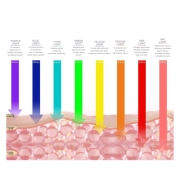
Table of Contents
- 1. Fine Lines & Wrinkles
- 2. Dark Spots & Skin Tone
- 3. Acne: The Blue + Red Double-Strike
- 4. The “Lit-From-Within” Radiance
- 5. Safety Without Compromise
- 6. FAQ: Expert Tips From the Workshop
- 7. Partner With Rainbow Technology
- 8. References
1. Fine Lines & Wrinkles
Red light acts as a “rebuilding” signal for skin. It stimulates fibroblasts to produce more collagen and elastin — the scaffolding that keeps skin firm. This is the most evidence-backed benefit in photobiomodulation: in a 136-subject randomized controlled trial, 611–650 nm red light delivered twice weekly increased intradermal collagen density and reduced wrinkle depth and roughness, with effects maintained at 12-week follow-up[1]. A separate 660 nm pulsed-LED study measured a 31% increase in type I procollagen and an 18% reduction in the collagen-degrading enzyme MMP-1[2].
- The Data (clinical): Intradermal collagen density increase, wrinkle depth and roughness reduction at 8–12 weeks of consistent use[1][2].
- The Data (internal): In user feedback collected on the Rainbow Rejuvalight Pro series, 87% of respondents reported visibly smoother skin and reduced wrinkle depth after 8 weeks of consistent use. Internal user survey data — supportive, not a clinical trial.
- Factory Note: Collagen signaling only triggers if the light actually reaches the fibroblasts with sufficient irradiance. That’s why we obsess over power density and wavelength accuracy — see our guide to what makes a good red light mask.
2. Dark Spots & Skin Tone
By supporting cell turnover and calming inflammation, red light can help skin look more uniform and brighter. A systematic review of 31 LED randomized controlled trials found overall improvements in skin appearance and photodamage parameters across multiple studies[3]. That said, we’re honest about the limits: pigmentation and dark-spot reduction is an emerging claim — red light is not a first-line pigment treatment, and results vary. Expect tone improvement as a gradual, secondary benefit rather than a spot-fading miracle.
- The Data (internal): In user feedback, 91% of respondents reported a more uniform, brighter skin tone after a series of targeted treatments. Internal user survey data — supportive, not a clinical trial.
3. Acne: The Blue + Red Double-Strike
When we add blue light (415 nm) to red light, we create a two-part attack on acne. Blue light is absorbed by porphyrins inside Cutibacterium acnes, generating reactive oxygen that kills the bacteria at the surface; red light then calms the underlying inflammation and supports healing. This is the best-documented combination in LED therapy: the landmark trial found a 76% reduction in inflammatory lesions with combined blue+red light — better than blue alone (60%) and comparable to benzoyl peroxide (58%), with zero side effects in the light group[4]. A home-use blue+red LED study confirmed 77% reduction in inflammatory lesions at 12 weeks[5].
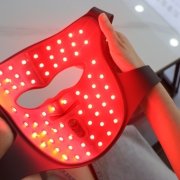
- How it works: Blue neutralizes surface bacteria; red soothes inflammation and redness underneath. The combination treats current breakouts and helps prevent the next ones[4][5].
4. The “Lit-From-Within” Radiance
Improved microcirculation is a well-described effect of photobiomodulation: the light stimulates mitochondrial activity and nitric-oxide-related vasodilation, which increases blood flow and brings more oxygen and nutrients to skin cells[6]. The visible result is a dewy, hydrated glow — healthier skin rather than a temporary shimmer. We flag this as mechanism-supported but individually variable: the glow is real for many users, but it’s a cumulative effect of consistent sessions, not a single-use highlight.
5. Safety Without Compromise
True red light therapy emits zero UV — the wavelengths used (630–850 nm) are non-ionizing and sit far below the retinal and skin hazard bands in the ICNIRP exposure framework[7]. It’s non-invasive, generates negligible heat with efficient LEDs, and requires no downtime. It is gentle enough for sensitive or rosacea-prone skin when used as directed. Two practical cautions: use a device with compliance documentation (FDA registration, CE, ISO 13485 — not just marketing claims), and see our safety primer for who should check with a doctor first.
6. FAQ: Expert Tips From the Workshop
Q: Can I use Retinol or Vitamin C with my red light mask?
A: Yes — use a “sandwich” approach. Use the mask on a clean, dry face first. Once the session is over and circulation is boosted, apply your retinol or serum. Skin is more receptive to active ingredients immediately after a light session. See our red light + retinol guide for the full routine.
Q: Will the mask get hot?
A: High-quality LEDs should be efficient, not hot. Premium chips convert energy into light rather than wasted heat. You may feel a very mild, relaxing warmth, but never a “burning” sensation. If a device runs hot, its electrical or thermal design is wasteful — and its irradiance claims deserve scrutiny.
Q: How do I know if the “blue light” in my mask is the right one?
A: Look for the specific wavelength. Effective acne-fighting blue light must hit the 415–420 nm peak. Many cheap masks use 450 nm (standard blue), which looks identical to the eye but is significantly less effective at killing bacteria[4][5].
Q: Is it okay to use it every single day?
A: Yes, but more isn’t always better. Cells have a limit on how much energy they can process in 24 hours — photobiomodulation follows a biphasic dose-response curve. 10–15 minutes once a day is the sweet spot for long-term results; see our session duration guide for the full breakdown.
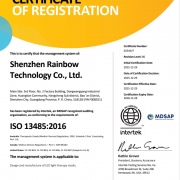
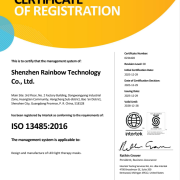
Quality management certifications held by Rainbow Technology’s Shenzhen facility.
7. Partner With Rainbow Technology
Experience factory-direct performance. Why pay for a brand name when you can invest in the source technology? Clinical-grade irradiance, verified wavelength accuracy, and 10+ years of manufacturing expertise in every mask we build.
- For Brands: Looking for reliable OEM/ODM manufacturing? Consult with our engineering team — we build red, red+blue, and red+NIR configurations with measured irradiance curves.
- For Skincare Lovers: Want the best at-home results? Explore the product lineup, or request a factory catalog & wholesale price list.
Rainbow (R&S) delivers ISO 13485, CE, and FDA registration compliance documentation from our Shenzhen facility. Request your custom quote today.
8. References
[1] Wunsch A, Matuschka K.
A controlled trial to determine the efficacy of red and near-infrared light treatment in patient satisfaction, reduction of fine lines, wrinkles, skin roughness, and intradermal collagen density increase. Photomedicine and Laser Surgery. 2014;32(2):93-100.
[2] Barolet D, Roberge CJ, Auger FA, et al.
Regulation of skin collagen metabolism in vitro using a pulsed 660 nm LED light source: clinical correlation with a single-blinded study. Journal of Investigative Dermatology. 2009;129(12):2751-2759.
[3] Jagdeo J, Austin E, Mamalis A, et al.
Light-emitting diodes in dermatology: a systematic review of randomized controlled trials. Lasers in Surgery and Medicine. 2018;50(6):613-628.
[4] Papageorgiou P, Katsambas A, Chu A.
Phototherapy with blue (415 nm) and red (660 nm) light in the treatment of acne vulgaris. British Journal of Dermatology. 2000;142(5):973-978.
[5] Kwon HH, Lee JB, Yoon JY, et al.
The clinical and histological effect of home-use, combination blue-red LED phototherapy for mild-to-moderate acne vulgaris in Korean patients: a double-blind, randomized controlled trial. British Journal of Dermatology. 2013;168(5):1088-1094.
[6] Hamblin MR.
Mechanisms and applications of the anti-inflammatory effects of photobiomodulation. AIMS Biophysics. 2017;4(3):337-361.
[7] International Commission on Non-Ionizing Radiation Protection (ICNIRP).
Guidelines on limits of exposure to incoherent visible and infrared radiation. Health Physics. 2013;105(1):74-96.

