
Do Red Light Therapy Masks Actually Work? A Comprehensive Guide to Their Benefits and Effectiveness
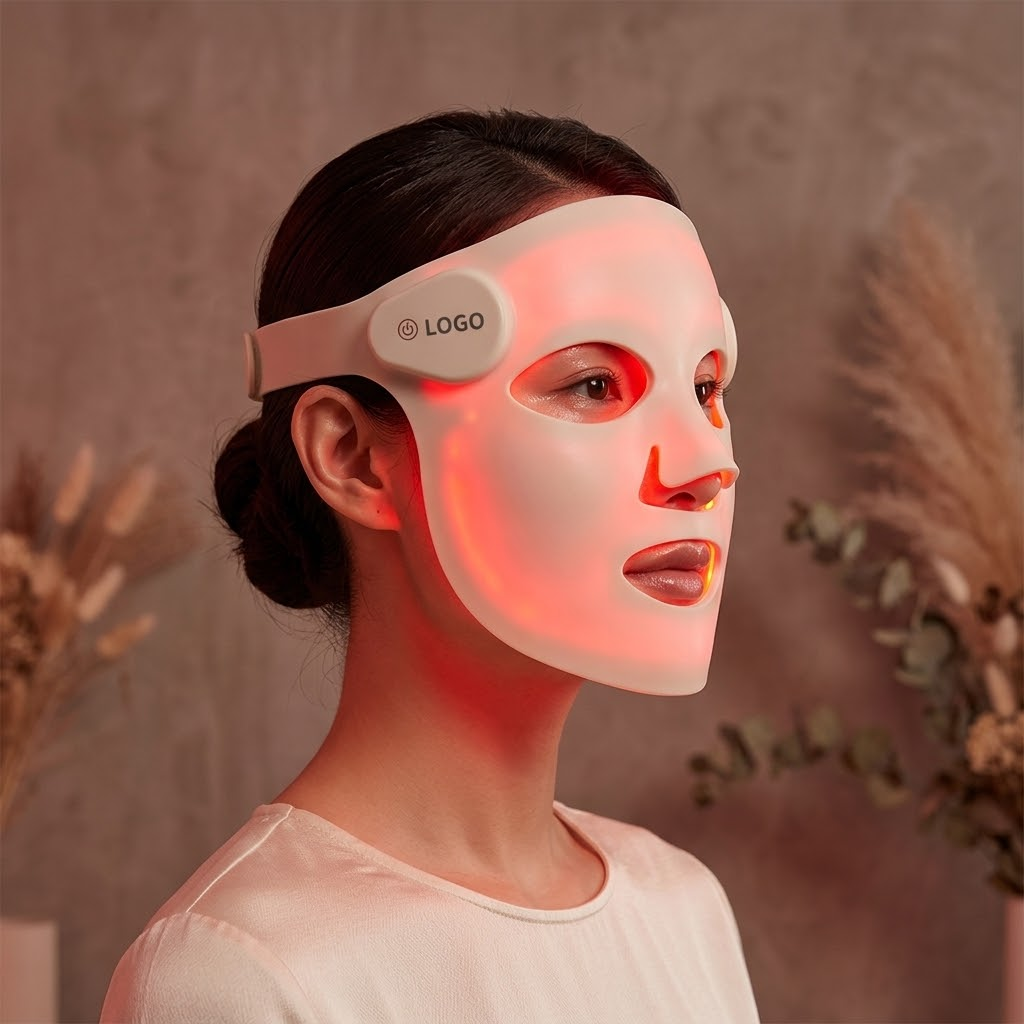
Yes — when used correctly, red light therapy masks deliver measurable benefits. A 2023 randomized controlled trial reported a 30% reduction in periocular wrinkle volume after 10 sessions of red (660 nm) photobiomodulation[1], and a systematic review of 31 randomized controlled trials supports LED therapy for acne and skin rejuvenation[2]. Results are cumulative: consistent use of 10–20 minutes, 3–5 times per week for 8–12 weeks is the realistic threshold for visible change[3].
Table of Contents
- 1. What Is Red Light Therapy and How Do LED Masks Work?
- 2. What Does the Clinical Evidence Actually Say?
- 3. Proven Benefits at a Glance
- 4. How to Use an LED Mask for Best Results
- 5. Safety & Skin Type Considerations
- 6. LED Mask vs. Traditional Skincare: What the Comparison Shows
- 7. Partner With Rainbow Technology for Custom LED Devices
- 8. References & External Links
1. What Is Red Light Therapy and How Do LED Masks Work?
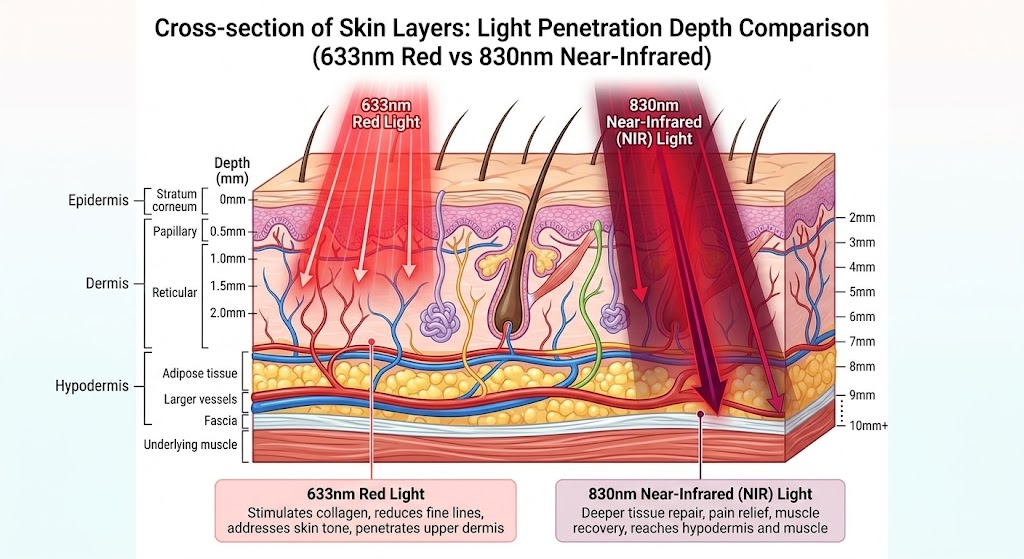
Red light therapy (RLT) — more formally, photobiomodulation (PBM) — uses specific wavelengths of red (600–700 nm) and near-infrared (700–1,100 nm) light to produce a beneficial biological response in skin cells[3]. An LED face mask delivers this light uniformly across the face, where it penetrates the epidermis and dermis to reach three key targets:
- Mitochondrial Energy (ATP): Red and near-infrared photons are absorbed by cytochrome c oxidase in the mitochondria, restoring cellular respiration and increasing ATP production — the fuel cells need to repair and regenerate[3].
- Fibroblast Activation & Collagen Synthesis: Stimulated fibroblasts produce more collagen and elastin — the structural proteins responsible for skin firmness and elasticity[1].
- Anti-Inflammatory Signaling: PBM modulates inflammatory cytokines, calming redness and supporting skin-barrier recovery — which is why it helps acne-prone and sensitive skin[2].
2. What Does the Clinical Evidence Actually Say?
Rather than relying on marketing claims, it is worth looking at what peer-reviewed studies measure:
| Study / Evidence | Protocol | Measured Result |
|---|---|---|
| RCT — Periocular Wrinkle Reduction (2023) | 10 sessions over 4 weeks, red 660 nm + amber 590 nm, split-face (n = 137) | ≈30% reduction in wrinkle volume; improved quality-of-life scores[1] |
| Systematic Review of 31 RCTs (2018) | LED therapy across acne, wound healing, rejuvenation | Grade B recommendation for acne & acute wound healing; LEDs alter skin biology safely with few adverse events[2] |
| PBM Mechanism Review (2018) | Mitochondrial redox signaling; cytochrome c oxidase absorption | Explains ATP restoration, redox signaling, and biphasic dose-response — why “more light” is not always better[3] |
Importantly, the evidence supports efficacy when parameters are correct — the right wavelength, irradiance, and dose. A systematic review of LED dermatology trials found that underpowered or negative studies often used sub-optimal power densities or fluences, not that the therapy itself fails[2]. This is why device engineering — not just the “red light” label — determines real-world results.
3. Proven Benefits at a Glance
When used consistently, red light therapy masks support:
- Collagen & Elastin Production: Firms skin and smooths fine lines[1].
- Reduced Inflammation & Redness: Calms acne-prone and sensitive skin[2].
- Accelerated Skin Healing: Supports recovery from acne scars, sun damage, and irritation[2].
- Even Skin Tone & Texture: Promotes a brighter, more uniform complexion over 8–12 weeks of consistent use[3].
- Non-Invasive & Painless: No downtime, no UV, minimal heat, and suitable for most skin types[2].
- Convenient At-Home Use: Typical sessions of 10–20 minutes, 3–5 times per week.
4. How to Use an LED Mask for Best Results
Maximizing results comes down to consistency and preparation:
- Cleanse Thoroughly: Remove makeup, oils, and sunscreen — they act as optical barriers that reflect photons away from the skin.
- Keep Skin Dry & Bare: Apply light therapy on clean, dry skin; avoid heavy occlusive layers before the session.
- Follow the Prescribed Dose: Most masks require 10–20 minutes per session, 3–5 times weekly. Do not exceed the manufacturer’s recommended time — PBM follows a biphasic dose-response curve, and overexposure can reduce benefits[3].
- Protect Your Eyes: Always wear the included eye shields or goggles when using high-output arrays.
- Be Consistent: Visible results typically appear after 4–8 weeks of regular use; the full cumulative effect builds over 8–12 weeks[1].
- Use Sunscreen Daily: Pairing RLT with broad-spectrum SPF protects the collagen you are building from UV damage.
5. Safety & Skin Type Considerations
Red light therapy masks are generally well tolerated across skin types. The 31-RCT systematic review reported only mild, transient adverse events — temporary redness, dryness, or mild stinging — and no severe events[2]. Key cautions:
- Photosensitive Conditions: Consult a healthcare professional if you have a photosensitivity disorder or are taking photosensitizing medications.
- Pregnancy & Nursing: Professional guidance is recommended before use.
- Patch Test: Perform a short test on a small skin area before your first full session.
- Device Safety Certification: Choose masks from manufacturers who verify optical safety (IEC 62471), electrical safety (IEC 60601 / CE), and quality systems (ISO 13485) — certified devices control irradiance and thermal output within safe limits.
6. LED Mask vs. Traditional Skincare: What the Comparison Shows
Topical products and LED therapy are complementary rather than competing. But the comparison clarifies where each works:
| Feature | LED Therapy Masks | Traditional Skincare Products |
|---|---|---|
| Depth of Action | Penetrates dermis to reach fibroblasts & mitochondria | Mostly surface-level (stratum corneum & upper epidermis) |
| Collagen Stimulation | Directly stimulates fibroblast collagen synthesis[1] | Indirect; depends on active-ingredient penetration |
| Anti-Inflammatory Effect | Modulates cellular inflammatory signaling[3] | Varies by product and formulation |
| Convenience | Hands-free 10–20 min sessions at home | Requires daily application routine |
| Side Effects | Minimal, transient; no downtime[2] | Possible irritation or allergic reactions |
Considering an LED mask for your own brand or clinic? Read how masks compare with panels on cost and margin, or explore our mask vs. panel buyer’s guide.
7. Partner With Rainbow Technology for Custom LED Devices
Whether you are launching a skincare brand or expanding a professional device line, the science only works when the engineering does. Rainbow Technology delivers end-to-end ODM/OEM manufacturing from our Shenzhen facility — from optical spectrum design to certified production:
- Full ISO 13485, CE, and FDA medical device compliance documentation[4].
- Custom optical spectrum engineering (630 nm, 660 nm, 810 nm, 830 nm, 850 nm) with precise irradiance control — the parameters that determine whether results match clinical trials.
- Flexible sample testing & small-batch production (500 to 1,000 units) for brand launches.
Looking for high-performance, custom-built LED light therapy devices? Visit our OEM/ODM Manufacturing Page or contact our engineering team for a custom quote.

