
What Is the Purpose of Red Light Therapy? A Comprehensive Overview
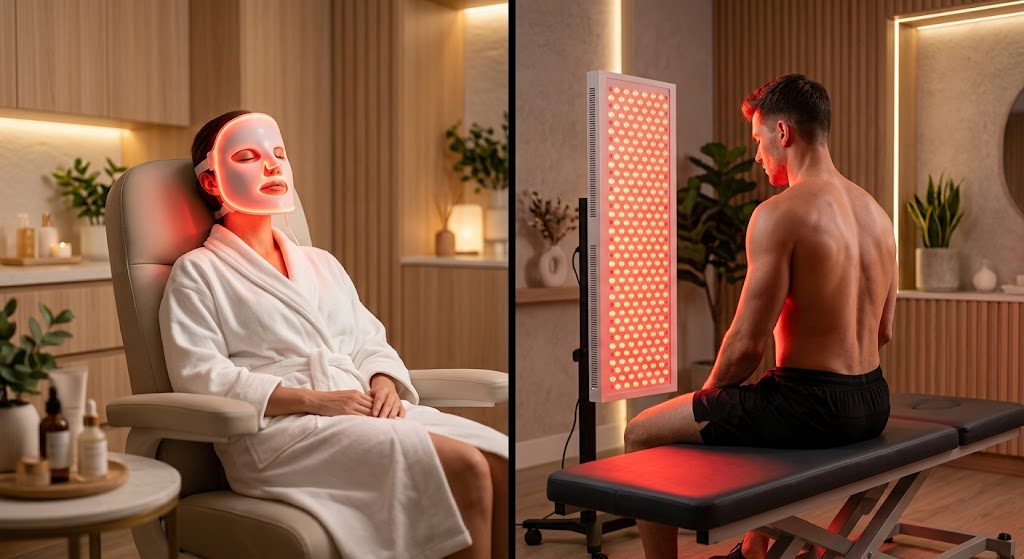
The purpose of red light therapy (RLT) is to deliver red and near-infrared photons (typically 630–880 nm) to cells, where they are absorbed by mitochondria to boost ATP production — the energy that drives healing[1]. That single mechanism translates into four evidence-supported applications: pain and inflammation relief[2], muscle recovery[3], skin rejuvenation[4], and wound healing. Brain/mood effects are promising but still emerging. RLT is not a cure-all — results depend on wavelength, dose, and consistency.
Table of Contents
- 1. What Red Light Therapy Is (and Isn’t)
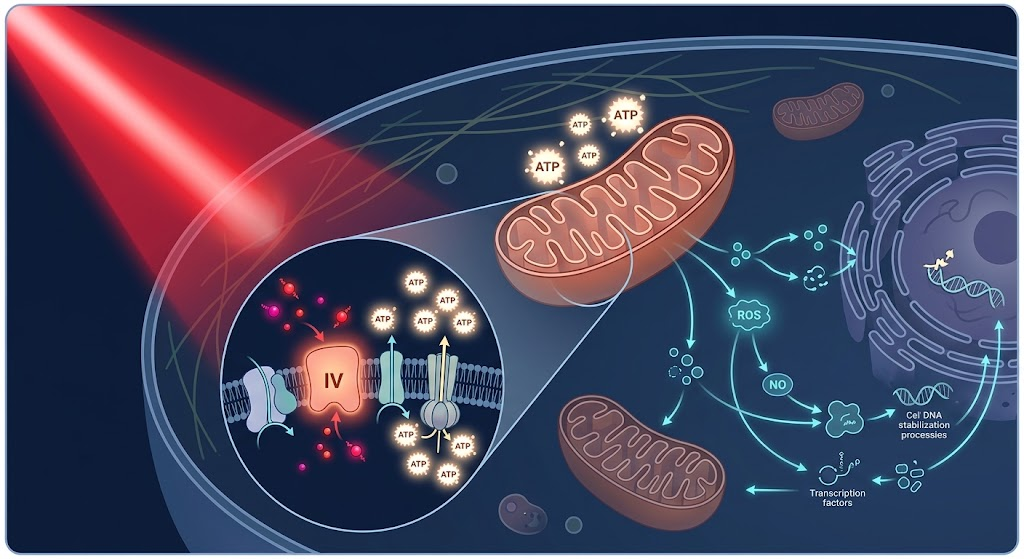
- 2. The Core Mechanism: Mitochondria and ATP
- 3. Key Benefits, by Domain
- 4. Practical Applications: Clinic vs. Home
- 5. What RLT Is Not: Honest Limits
- 6. Partner With Rainbow Technology for Custom LED Devices
- 7. References & External Links
1. What Red Light Therapy Is (and Isn’t)
Red light therapy (RLT) exposes the body to low-level red and near-infrared light — in therapeutic devices, typically 630–880 nm. The key distinction from UV light: these wavelengths carry no ionizing or DNA-damaging energy. Instead, they penetrate skin and soft tissue (red light to a few millimeters, near-infrared several centimeters) and are absorbed by cellular structures[1][5].
The formal name for this effect is photobiomodulation (PBM) — the use of light to modulate cellular biology, as opposed to thermal effects (like infrared saunas) or destructive effects (like lasers used in surgery). If a device heats the skin, it is not doing photobiomodulation; if it delivers precise wavelengths at controlled power, it is[1].
2. The Core Mechanism: Mitochondria and ATP
Every claimed benefit of RLT traces back to one event: photons absorbed by cytochrome c oxidase — a key enzyme in the mitochondrial respiratory chain. This absorption increases ATP production, triggers a brief, controlled reactive oxygen species (ROS) signal, and releases nitric oxide. The downstream cascade activates transcription factors that drive cell survival, proliferation, protein synthesis, and anti-inflammatory signaling[1][6].
Importantly, PBM follows a biphasic dose response: too little light does nothing, and too much light inhibits the same pathways. The effective window is real but narrow — which is why dose (irradiance × time) matters more than how “strong” a device feels[1].
3. Key Benefits, by Domain
The same cellular mechanism shows up across different tissue types. Here is the honest evidence picture per application — with deep-dives where we have them:
| Application | Evidence Status | Deep Dive |
|---|---|---|
| Pain & inflammation | Strong — e.g., 16-RCT meta-analysis in neck pain; reproducible anti-inflammatory effects[2][6] | Red light therapy panels guide |
| Muscle recovery & performance | Strong — meta-analysis of 13 RCTs; best when applied pre-exercise[3] | Infrared therapy for muscle recovery |
| Skin & anti-aging | Strong — 31-RCT systematic review; collagen and rhytide outcomes[4] | Red light benefits for skin |
| Wound healing & tissue repair | Moderate-strong — multiple reviews support accelerated healing[1] | — |
| Brain & mood | Emerging — promising pilot data, not yet consensus-level evidence[7] | — |
4. Practical Applications: Clinic vs. Home
RLT is delivered either in clinical settings (high-power panels, professional protocols) or at home (FDA-cleared masks, panels, and wands). Both use the same wavelengths; the differences are coverage, irradiance, and cost per session. Clinical units typically deliver higher irradiance over larger body areas; home devices trade absolute power for convenience and consistency — which, over 8–12 weeks, often wins[4].
Choosing the right format is a real decision: see our mask vs. panel comparison, the cost and margin analysis, and — for protocols — how often to use a red light mask. If you are weighing red vs. near-infrared for your goal, red light vs. infrared breaks it down.
5. What RLT Is Not: Honest Limits
- Not a substitute for medical treatment. RLT complements, but does not replace, diagnosis and care for serious conditions.
- Not effective “as long as it feels warm.” Heat is not the mechanism. A device must deliver the right wavelength and dose — see the science of wavelengths.
- Not instant. Skin and tissue outcomes are cumulative over weeks. Marketing that promises overnight transformation is not selling photobiomodulation.
- Not a class-1 magic bullet. The biphasic dose response means more time is not always better — follow device protocols[1].
6. Partner With Rainbow Technology for Custom LED Devices
The purpose of RLT is biological; delivering it correctly is engineering. Wavelength tolerance, per-band irradiance, thermal management, and photobiological safety are the difference between a device that performs and a device that merely glows — and they are the daily work of Rainbow Technology’s Shenzhen R&D team. As an ISO 13485, CE, and FDA-compliant LED device manufacturer, we support:
- Custom red / NIR / multi-wavelength device design with verified optical specifications.
- ODM/OEM production of masks, panels, and full-body devices — from prototyping to mass production.
- Full regulatory documentation (ISO 13485, CE, FDA 510(k) support) for your market entry.
Building a light therapy brand? Visit our OEM/ODM Manufacturing Page or request your custom quote today.

