
Can I Use Retinol After a LED Mask? A Dermatology-Inspired Guide to Safe and Effective Skincare
Yes — you can use retinol after an LED mask, when done thoughtfully. The order is the point: LED therapy on clean bare skin first, then retinol after a short cool-down. One clarification matters: retinoid photosensitivity is UV-specific, and LED masks emit no UV — the real reasons to avoid retinol-before are physical light-blocking and irritation layering, not “photosensitivity.” This guide covers the 6-step routine, a beginner frequency schedule (LED 3–5×/week, retinol 2–3 nights), and safety tips.
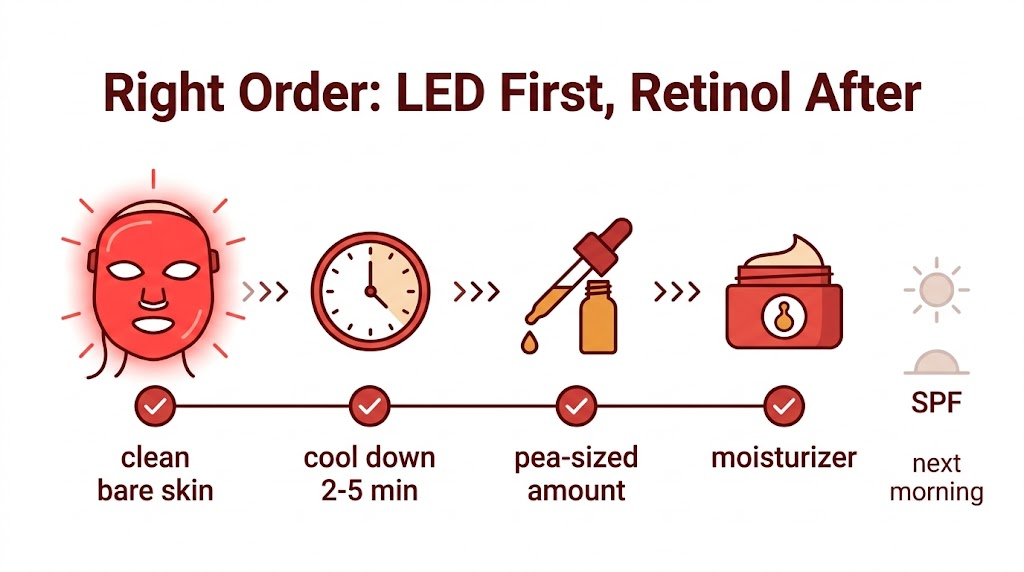
Table of Contents
- 1. What Is LED Light Therapy?
- 2. Understanding Retinol and Its Effects
- 3. Can I Use Retinol After an LED Mask?
- 4. Benefits of Combining
- 5. Step-by-Step Routine
- 6. How Often to Combine
- 7. Safety Tips
- 8. Choosing a High-Quality LED Mask
- 9. FAQ
- 10. Partner With Rainbow Technology
- 11. References
1. What Is LED Light Therapy and How Does It Work?
LED (Light Emitting Diode) skincare devices use specific wavelengths of light to trigger biological responses in the skin without UV exposure. Common wavelengths used in LED masks include:
- Red Light (630–660 nm): Supports collagen-related activity and reduces visible inflammation
- Blue Light (~415 nm): Targets acne-causing bacteria
- Near-Infrared Light (810–850 nm): Penetrates deeper layers to support tissue recovery
Research suggests red and near-infrared light may enhance mitochondrial activity and cellular energy production, which can support skin repair processes[1].
Unlike harsh treatments, LED therapy is typically non-thermal, non-invasive, and suitable for regular at-home use when devices are used according to manufacturer guidelines.
2. Understanding Retinol and Its Effects on the Skin
Retinol is a vitamin A derivative widely used in dermatology for:
- Increasing cell turnover
- Supporting collagen synthesis
- Improving uneven pigmentation
- Reducing acne and clogged pores
Retinoid efficacy in photoaging and acne is well documented in the dermatology literature[3], including controlled trials showing significant collagen and fine-line improvement with cosmetic-strength retinol[4].
However, retinol can also increase skin sensitivity — especially during the adjustment phase. Common side effects include:
- Dryness
- Redness
- Peeling
- Temporary irritation
Because LED therapy can enhance circulation and skin responsiveness, the order in which you apply retinol becomes important.
3. Can I Use Retinol After an LED Mask?
Yes — but timing and intensity matter. Most skincare professionals agree that applying retinol after LED therapy is generally acceptable, provided the LED session is moderate and the skin barrier is respected.
Why applying retinol after LED therapy may work well:
- LED treatment is typically performed on clean, product-free skin, allowing better light penetration.
- After LED exposure, skin circulation may increase, which can support product absorption[1].
- Red light’s calming effects may help reduce some irritation associated with retinol use[1].
A clarification about “photosensitivity”:
Retinoid photosensitivity is UV-specific — LED masks emit no UV, so the “retinol + LED = photosensitivity risk” idea doesn’t hold. The real reasons to avoid retinol before a session:
- Physical light-blocking: a retinol layer sits on the skin and scatters/absorbs light, reducing what reaches the tissue.
- Irritation layering: wearing the mask over freshly applied actives can trap heat and amplify stinging.
What to avoid:
- ❌ Avoid pairing strong retinoids with high-intensity or prolonged LED sessions — start with low-strength retinol and moderate session length.
- ❌ Don’t apply retinol on compromised or broken skin.
4. Benefits of Combining Retinol and LED Light Therapy
Enhanced Collagen Support
Red light therapy may stimulate fibroblast activity and collagen density[2], while retinol encourages collagen renewal through cellular turnover[3].
Improved Skin Texture
Retinol smooths the surface of the skin, while LED therapy may help calm inflammation that contributes to uneven tone[1].
Balanced Acne Care
Blue light can help manage acne-causing bacteria[5], while retinol helps prevent pore congestion.
Better Routine Consistency
Short LED sessions followed by simplified nighttime skincare can help users maintain consistent habits — a key factor in long-term results.
5. How to Safely Use Retinol After an LED Mask (Step-by-Step Routine)
- Cleanse first: Use a gentle, non-stripping cleanser. Avoid exfoliating acids before LED therapy. See our pre-treatment prep guide.
- Perform LED treatment: Use the mask on clean, dry skin. Most at-home devices recommend 10–20 minutes depending on intensity.
- Let skin cool down: Wait 2–5 minutes after removing the mask to allow the skin to return to baseline temperature.
- Apply retinol (pea-sized amount): Start with low concentration if you are new to retinol.
- Moisturize generously: Use barrier-supporting ingredients such as ceramides, panthenol, or hyaluronic acid — see our post-therapy moisturizing guide.
- Use sunscreen the next day: Retinol increases UV photosensitivity, making daily SPF essential.
6. How Often Should You Combine Retinol and LED Therapy?
A balanced beginner schedule might look like:
| Treatment | Beginner Frequency | Notes |
|---|---|---|
| LED Mask | 3–5 times per week | 10–20 min/session at moderate intensity |
| Retinol | 2–3 nights per week initially | Gradually increase based on skin tolerance |
Consistency is more important than intensity — overuse can reduce benefits due to the skin’s biphasic response to stimulation[6].
7. Safety Tips Before Combining Retinol and LED Masks
- Avoid using retinol on compromised or broken skin.
- Reduce frequency if redness or excessive dryness occurs.
- Consult a dermatologist if you are pregnant, highly sensitive, or using prescription retinoids.
- Choose LED devices designed for cosmetic use with controlled wavelengths and UV-free output.
8. Choosing a High-Quality LED Mask Matters
Not all LED devices are built the same. When selecting a mask, consider:
- Verified wavelength ranges (commonly 630–660 nm red light) — checked by spectrometer per batch
- Even light distribution across the face
- Adjustable treatment modes and intensity
- Non-UV LEDs for safety
- Reliable manufacturing standards (CE, RoHS, FCC, KC; IEC 62471; ISO 13485 + MDSAP)
High-quality engineering plays a major role in how safely retinol and LED therapy can be combined.
9. Frequently Asked Questions
Q: Can beginners use retinol after LED therapy?
A: Yes — start slowly with low-strength retinol and monitor skin response. See our beginner quick-start guide.
Q: Will combining them make results faster?
A: Consistency matters more than speed. Combining treatments may support gradual improvements, but overuse can increase irritation[6].
Q: Should I use retinol every time I use an LED mask?
A: Not necessarily. Many users alternate nights to maintain skin balance.
Q: Where can I find the full evidence breakdown?
A: See our complete retinol + red light guide with the evidence-grading table.
10. Partner With Rainbow Technology
Combining retinol with LED is only safe and effective when the device delivers what it claims. At Rainbow, we build masks designed for exactly this kind of routine:
- Verified wavelengths: 630–660 nm red, ~415 nm blue, 810–850 nm NIR — checked by spectrometer per batch.
- Adjustable intensity: Multiple treatment modes so beginners and advanced users can tune sessions.
- UV-free output: Non-ionizing LEDs with IEC 62471 photobiological safety.
- Compliance: CE, RoHS, FCC, KC; ISO 13485 + MDSAP QMS; FDA registration compliance documentation.
- OEM/ODM for global brands: Consult our engineering team; reference designs on our product lineup page.
Request your custom quote today.
11. References
[1] Hamblin MR.
Mechanisms and applications of the anti-inflammatory effects of photobiomodulation. AIMS Biophysics. 2017;4(3):337-361.
[2] Wunsch A, Matuschka K.
A controlled trial to determine the efficacy of red and near-infrared light treatment in patient satisfaction, reduction of fine lines, wrinkles, skin roughness, and intradermal collagen density increase. Photomedicine and Laser Surgery. 2014;32(2):93-100.
[3] Mukherjee S, Date A, Patravale V, et al.
Retinoids in the treatment of skin aging: an overview of clinical efficacy and safety. Clinical Interventions in Aging. 2006;1(4):327-348.
[4] Kafi R, Kwak HSR, Schumacher WE, et al.
Improvement of naturally aged skin with vitamin A (retinol). Archives of Dermatology. 2007;143(5):606-612.
[5] Papageorgiou P, Katsambas A, Chu A.
Phototherapy with blue (415 nm) and red (660 nm) light in the treatment of acne vulgaris. British Journal of Dermatology. 2000;142(5):973-978.
[6] Huang YY, Sharma SK, Carroll J, Hamblin MR.
Biphasic dose response in low level light therapy — an update. Dose-Response. 2011;9(4):602-618.

