
Rainbow Red Light Therapy Mask Manufacturer: Your Ultimate Guide to Quality LED Beauty Devices
A “rainbow” red light therapy mask is a multi-wavelength LED facial device — typically combining red (630 nm), blue (415 nm), yellow, purple, and near-infrared (850 nm) — so one device can address several skin concerns. When sourcing, the manufacturer matters more than the color count: verified wavelengths, real irradiance, certifications (CE, RoHS, FCC, KC), OEM/ODM flexibility, and documented QC are the non-negotiables. This guide covers what to check before you place an order — with Shenzhen Rainbow Technology as the working example.
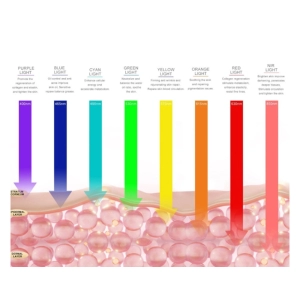
Table of Contents
- 1. What Is a Rainbow Red Light Therapy Mask?
- 2. Why the Manufacturer Matters
- 3. How to Choose a Manufacturer: The Sourcing Checklist
- 4. Key Wavelengths and What the Evidence Says
- 5. How to Use a Rainbow Mask Safely
- 6. Industry Trends to Watch
- 7. Partner With Rainbow Technology
- 8. References
1. What Is a Rainbow Red Light Therapy Mask?
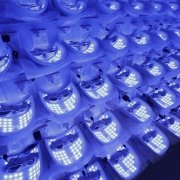
A rainbow red light therapy mask is an advanced LED facial device that emits multiple wavelengths of light — including red, blue, yellow, purple, and near-infrared. These colors target different skin concerns such as acne, pigmentation, collagen production, and inflammation. Unlike single-color masks, the rainbow variety offers versatile treatment options in one device, making it popular for both home and clinical use.
That versatility is also the sourcing challenge: more colors means more LEDs, more control electronics, and more claims to verify. The rest of this guide tells you what to check before committing to a supplier.
2. Why the Manufacturer Matters
When sourcing red light therapy masks, partnering with a reliable manufacturer is critical. Here’s why:
- Quality assurance: Top manufacturers use premium materials like medical-grade silicone and ABS plastic to ensure durability and comfort.
- Advanced technology: They integrate the latest LED photon therapy technology with precise wavelengths (e.g., 630 nm red, 415 nm blue, 850 nm near-infrared) for maximum efficacy.
- Customization options: OEM/ODM services allow businesses to brand and customize masks to meet their market needs.
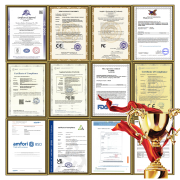
- Certification & safety: Compliance with CE, RoHS, FCC, and KC certifications guarantees safety and global market acceptance.
- Customer support: Reputable manufacturers provide warranties (often 18 months) and responsive after-sales service.
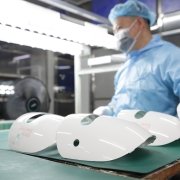
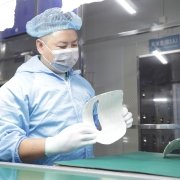

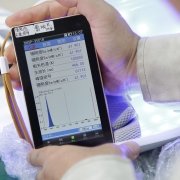

3. How to Choose a Manufacturer: The Sourcing Checklist
When selecting a rainbow red light therapy mask manufacturer, work through these five checks — each one is a question you should be able to get a documented answer to:
| Checklist Item | What to Ask / Verify | Working Example (Rainbow) |
|---|---|---|
| MOQ & trial orders | What’s the minimum order quantity? Is a trial/sample order available before committing? | MOQs from 1000 pieces; trial orders available. |
| Customization capability | Logo printing, packaging design, custom features (LED layout, colors, app control)? | Full OEM/ODM: logo, packaging, feature customization, app integration. |
| Lead time | Sample turnaround and bulk production time — and what happens if dates slip. | Samples in 3–7 days; bulk orders typically 30–45 days. |
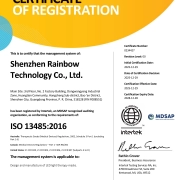
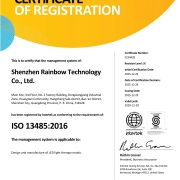
| Quality control system | In-process inspections? 100% aging tests? Spectrometer wavelength verification per batch? | In-process inspections + 100% aging tests; ISO 13485 & MDSAP certified QMS. See our buyer’s checklist. |
| Payment & shipping | Flexible payment terms (T/T, PayPal, Western Union) and reliable logistics (DHL, FedEx, sea freight)? | Flexible payment options; DHL / FedEx / sea freight worldwide. |
4. Key Wavelengths and What the Evidence Says
Not all colors are created equal. When a supplier lists five wavelengths, ask which ones carry clinical evidence and which are “traditional positioning.” Here’s the honest breakdown:
| Wavelength | Claimed Use | Evidence Level |
|---|---|---|
| Red 630 nm | Collagen stimulation, wrinkle reduction, elasticity | ✅ Strong |
| Blue 415 nm | Targets acne-causing bacteria (C. acnes), calms inflammation | ✅ Strong |
| Near-infrared 850 nm | Deeper penetration — circulation, healing | ✅ Good |
| Yellow / amber | Brightening, reducing redness | ⚠️ Emerging / traditional positioning |
| Purple / green | Targeted “treatments” per marketing | ⚠️ Limited direct evidence — treat as bonus, not headline |
The red and blue evidence is built on published RCTs: red light for collagen and wrinkle reduction[2], and blue light for acne[3] — including a randomized home-use study of a combined blue + red LED device[4]. A systematic review of 31 LED RCTs in dermatology found the strongest support for acne, herpes, and acute wound healing[5]. When you source a rainbow mask, verify that the red, blue, and NIR channels are at clinically meaningful irradiance — see our NIR wavelength guide for the deep-dive.
On “clinical validation”: Rainbow masks are engineered to match the wavelengths and dose parameters validated in published photobiomodulation research[1] — the same approach reputable medical-device manufacturers use. Always ask a supplier for their wavelength and irradiance specs in writing rather than accepting “clinically tested” marketing language at face value.
5. How to Use a Rainbow Mask Safely
- Cleanse your face: Remove makeup and dirt for optimal light penetration.
- Wear the mask: Secure it comfortably, aligning the eye openings properly.
- Select light mode & duration: Choose the appropriate color and set the timer (usually 10–20 minutes).
- Relax during treatment: Avoid staring directly at the LEDs.
- Post-treatment care: Apply serums or moisturizers to enhance results.
6. Industry Trends to Watch
- Wireless & rechargeable designs: Increasing demand for cordless masks for mobility — with USB-C charging becoming standard.
- Expanded color options: Beyond red and blue, masks now include green, purple, and yellow LEDs for targeted treatments — with the evidence caveats noted above.
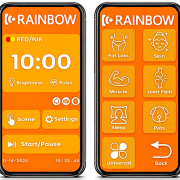
- Smartphone integration: Apps that control mask settings and track usage — a differentiator for brands launching their own app-connected devices.
7. Partner With Rainbow Technology
Choosing the right rainbow red light therapy mask manufacturer is pivotal for businesses aiming to offer cutting-edge skincare solutions. Shenzhen Rainbow Technology Co., Ltd. — with over 12 years of experience, a 4.8/5 partner rating, and global shipping across North America, Oceania, and South America — exemplifies the ideal partner. What you get:
- Masks with 4 to 8 LED colors (red, blue, yellow, purple, near-infrared); flagship RB-008B features 216 LEDs, a 2000 mAh rechargeable battery, USB-C charging, and adjustable 5–20 minute treatment times.
- Full CE, RoHS, FCC, KC certificates, plus ISO 13485 and MDSAP certified QMS and FDA registration compliance documentation.
- OEM/ODM: logo printing, packaging design, feature customization, app integration — MOQs from 1000 pieces with trial orders. Consult our engineering team.
- Reference designs on our product lineup page.
Request your custom quote today.
8. References
[1] Hamblin MR.
Mechanisms and applications of the anti-inflammatory effects of photobiomodulation. AIMS Biophysics. 2017;4(3):337-361.
[2] Wunsch A, Matuschka K.
A controlled trial to determine the efficacy of red and near-infrared light treatment in patient satisfaction, reduction of fine lines, wrinkles, skin roughness, and intradermal collagen density increase. Photomedicine and Laser Surgery. 2014;32(2):93-100.
[3] Papageorgiou P, Katsambas A, Chu A.
Phototherapy with blue (415 nm) and red (660 nm) light in the treatment of acne vulgaris. British Journal of Dermatology. 2000;142(5):973-978.
[4] Kwon HH, Lee SK, Choi YS, et al.
Combined 420-nm blue and 660-nm red light-emitting diode phototherapy shows significant improvement in acne vulgaris: a randomized, double-blind, sham-controlled trial. British Journal of Dermatology. 2013;168(6):1288-1294.
[5] Jagdeo J, Austin E, Mamalis A, et al.
Light-emitting diodes in dermatology: a systematic review of randomized controlled trials. Lasers in Surgery and Medicine. 2018;50(6):613-628.

