
What Is the Difference Between Red Light Therapy and Infrared?
Red Light Therapy vs. Infrared: What’s the Difference and Which Do You Need?
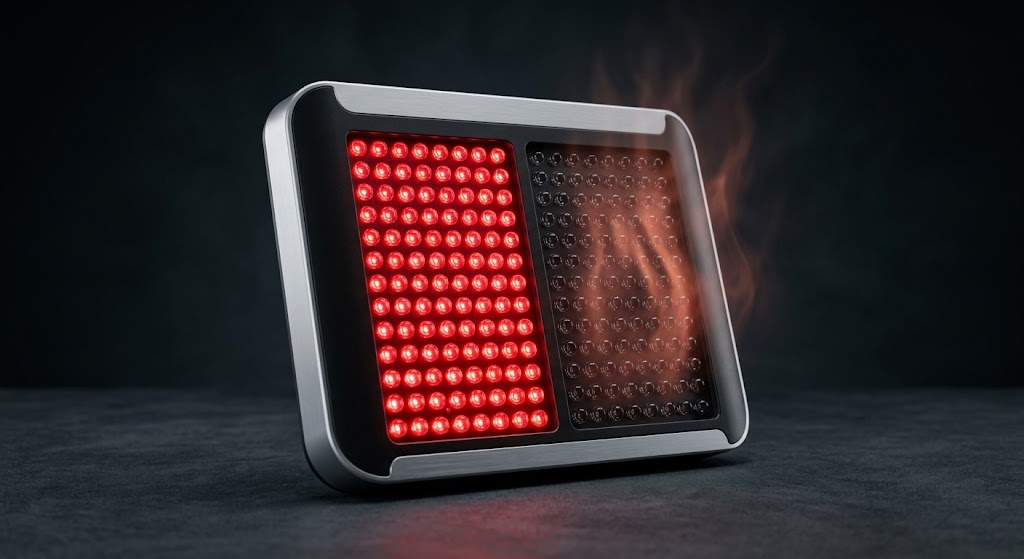
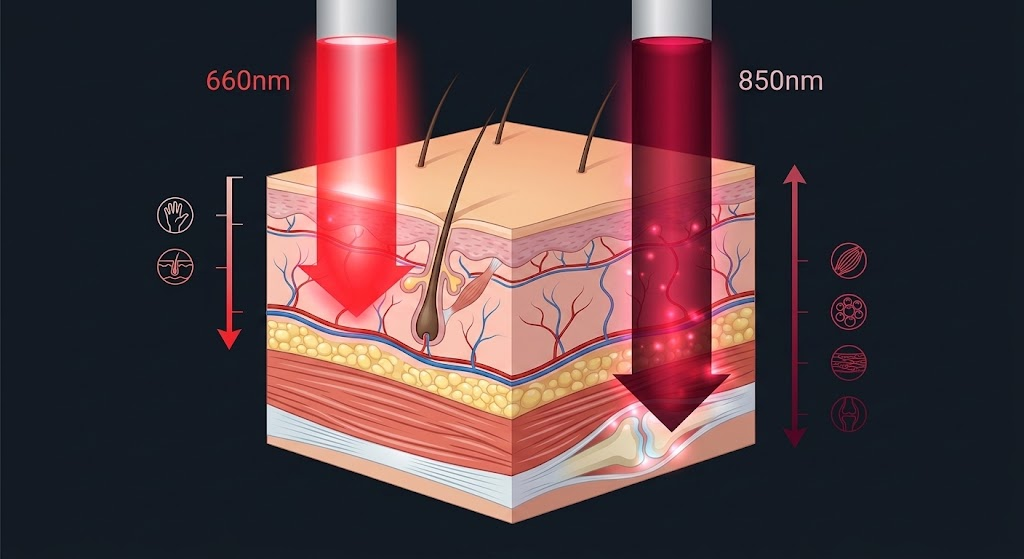
Red light (620–700 nm) is visible, penetrates 1–6 mm, and targets the epidermis and dermis for collagen, fine lines, and surface healing[2]. Near-infrared (780–850 nm) is invisible, penetrates several centimeters, and reaches muscle, joints, and deep tissue for inflammation and pain relief[1][4]. They are complementary, not competing — which is why dual-wavelength devices dominate professional and consumer lines alike.
Table of Contents
- 1. Red Light Therapy: The Skin Specialist
- 2. Infrared (Near-Infrared): The Deep-Tissue Worker
- 3. The Physics: Wavelength, Depth, and What “Infrared” Really Means
- 4. Quick Comparison Table
- 5. Can You Use Both Together?
- 6. Which One Do You Need?
- 7. Partner With Rainbow Technology for Custom LED Devices
- 8. References & External Links
1. Red Light Therapy: The Skin Specialist
Red light therapy uses visible red wavelengths, typically 620–700 nm. This light penetrates the skin roughly 1–6 millimeters, targeting the epidermis and dermis — exactly where collagen, elastin, and pigment-related structures live. At the cellular level, red photons are absorbed by mitochondrial chromophores (notably cytochrome c oxidase), which boosts ATP production and triggers the repair-and-regeneration cascade known as photobiomodulation[2][3]. Clinically, red light is studied primarily for:
- Collagen and elastin production — the structural proteins behind firm, resilient skin[2]
- Skin tone improvement and reduction of wrinkles, fine lines, acne, and scars[2]
- Surface-level wound healing and post-procedure recovery[3]
In short: if your goal is anti-aging, skin rejuvenation, and surface healing, red light is the wavelength your skin can actually “use.”
2. Infrared (Near-Infrared): The Deep-Tissue Worker
“Infrared therapy” in the context of light-emitting devices refers specifically to near-infrared (NIR) light — typically 780–850 nm for therapeutic devices. NIR is invisible to the human eye and penetrates far deeper — several centimeters — reaching muscles, joints, tendons, and connective tissue[1]. It is most effective for:
- Reducing inflammation at the tissue level[1][4]
- Relieving deep muscle and joint pain — a 2009 meta-analysis of 16 RCTs found NIR therapy significantly reduced chronic neck pain[5]
- Enhancing muscle recovery and reducing exercise-induced soreness[6]
- Supporting joint and deeper-tissue health[1]
Because of its deeper penetration, infrared is the go-to for pain relief, inflammation reduction, and deep-tissue healing.
3. The Physics: Wavelength, Depth, and What “Infrared” Really Means
A common confusion: “infrared” is not one thing. The infrared band spans roughly 780 nm to 1 mm and is subdivided by international standards (ISO 20473) into near-infrared (NIR), mid-infrared (MIR), and far-infrared (FIR)[4]. Only near-infrared behaves like red light — non-thermal, photon-driven photobiomodulation. Mid- and far-infrared are perceived as heat (think infrared saunas) and act through entirely different mechanisms[4].
This is why device specifications matter more than marketing labels. A panel that says “infrared” could mean 850 nm LEDs (therapeutic NIR) — or a heating element (thermal IR). Wavelength, irradiance, and optical design determine what the light actually does in tissue[4].
4. Quick Comparison Table
| Feature | Red Light Therapy | Near-Infrared Therapy |
|---|---|---|
| Wavelength | 620–700 nm (visible red) | 780–850 nm (invisible) |
| Penetration Depth | 1–6 mm (epidermis + dermis) | Up to several cm (muscle, joints, deep tissue) |
| Best For | Skin rejuvenation, anti-aging, surface healing[2] | Pain relief, inflammation, muscle recovery[5][6] |
| Common Benefits | Collagen boost, even tone, scar healing | Deep-tissue healing, joint support, recovery |
| Visibility | Visible red glow | Invisible to the eye |
5. Can You Use Both Together?
Yes — and this is precisely why dual-wavelength (red + NIR) devices are the industry standard. In a single session, red light treats surface skin while near-infrared reaches deeper structures: skin concerns and muscular or joint issues addressed at once[1][3]. For masks, red-dominant panels keep the treatment skin-focused; for full-body panels, alternating or simultaneous red + NIR is common. Both are non-invasive and generally well tolerated when used as directed[2].
Practical detail: red and NIR LEDs emit at different voltages and require separate driver circuits — a genuine engineering consideration in device design. A cheap “dual-wavelength” device may under-drive one band. Specifications tell the truth: check the exact wavelength and irradiance per band.
6. Which One Do You Need?
- Skin-first goals (wrinkles, tone, glow): choose red-dominant devices. See our guide on red light therapy benefits for skin and whether red light masks actually work.
- Pain, inflammation, recovery: near-infrared is the deeper worker — explored in depth in our red light therapy panels guide.
- Both skin and body: a dual-wavelength panel or mask covers the full spectrum. We break down the choice in our mask vs. panel comparison and the manufacturing cost breakdown.
And before you buy: read the science of wavelengths and how often to use a red light mask — parameters determine outcomes.
7. Partner With Rainbow Technology for Custom LED Devices
The red-vs-infrared distinction is an engineering problem before it is a marketing one: dual-band driver circuits, wavelength tolerance, and irradiance calibration are exactly what Rainbow Technology’s Shenzhen R&D team builds every day. As an ISO 13485, CE, and FDA-compliant LED device manufacturer, we support:
- Custom red / NIR / dual-wavelength spectrum design with verified per-band irradiance.
- ODM/OEM production of masks, panels, and full-body devices — from prototyping to mass production.
- Full regulatory documentation (ISO 13485, CE, FDA 510(k) support) for your market entry.
Building a device brand? Visit our OEM/ODM Manufacturing Page or request your custom quote today.

