
What Does Green Light Do for Your Skin? Exploring the Benefits of Green Light Therapy
What Does Green Light Therapy Do for Skin? A Science-Backed Guide
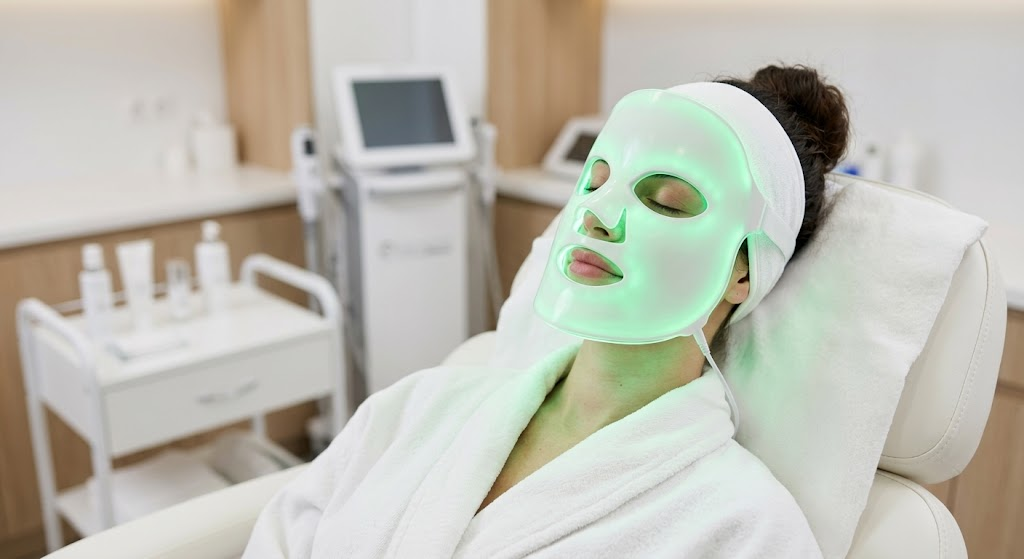
Green light therapy (~520 nm) targets the epidermis, where it modulates melanin-producing cells to help fade dark spots, even out tone, and calm visible redness[1][3]. It works cumulatively: expect 8–12 weeks of consistent use for visible results. Green light is not for deep wrinkles or collagen loss — that is red and near-infrared territory. Evidence is promising but thinner than for red or blue light, so device quality and honest expectations matter[2].
Table of Contents
- 1. What Does Green Light Therapy Do for Skin?
- 2. How Green Light Works (and What It Can’t Do)
- 3. Benefits of Green Light for Skin
- 4. How Long Until You See Results?
- 5. Safety & Who Should Be Cautious
- 6. Green vs. Red vs. Blue: Which Wavelength When?
- 7. Partner With Rainbow Technology for Custom LED Devices
- 8. References & External Links
1. What Does Green Light Therapy Do for Skin?
Green light therapy uses narrow-band green LED light — for skincare devices, typically around 520 nm — to address surface-level concerns: hyperpigmentation, uneven skin tone, and visible redness[1]. Unlike red and near-infrared light, which penetrate into the dermis, green light works in the epidermis, the layer where pigment irregularities and surface redness live[3].
It is important to distinguish green light therapy from general “green light” in the 495–570 nm range. Therapeutic devices are engineered around a narrow peak (~520–530 nm) with controlled irradiance — the broad visible range is what you see, not what treats your skin.
2. How Green Light Works (and What It Can’t Do)
Green light interacts with melanocytes — the cells that produce melanin, the pigment behind dark spots and discoloration. By modulating melanocyte activity, green light supports more balanced melanin distribution and helps break up existing pigment clusters, leading to a gradually more even tone[1][3]. It also has documented calming effects on superficial inflammation and visible redness[2].
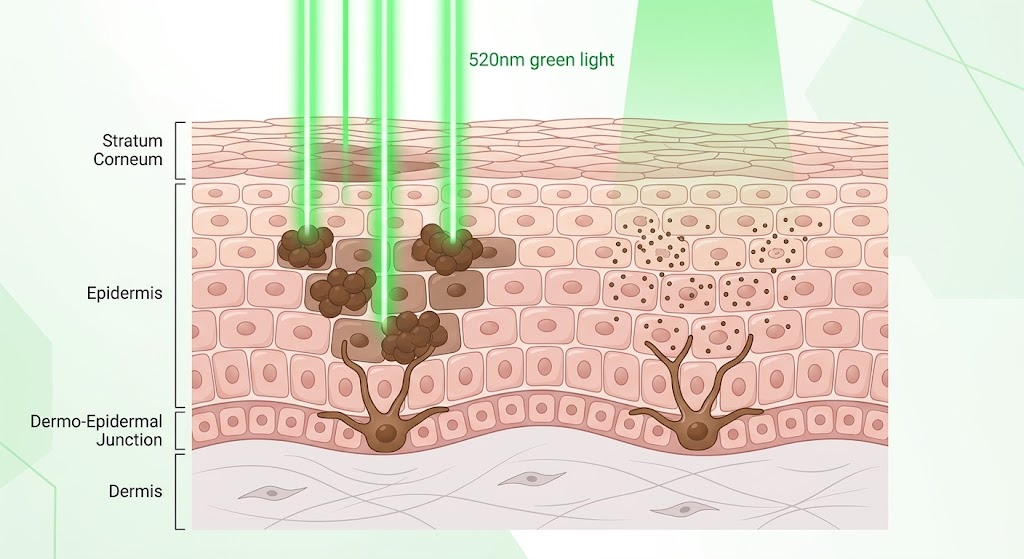
An honest caveat: visible light — including green — can, under certain conditions and in lighter skin types, stimulate melanin production rather than suppress it[4]. This is why dose, wavelength precision, and treatment protocols matter — and why “any green light device” is not the same as an engineered therapeutic device.
What green light cannot do: it does not meaningfully stimulate deep collagen production — that requires red (630–700 nm) or near-infrared (810–850 nm) light that reaches the dermis[5]. If your goals are deep wrinkles or sagging, green light alone is the wrong tool.
3. Benefits of Green Light for Skin
| Benefit | How It Works | Evidence Level |
|---|---|---|
| Evens Skin Tone | Modulates melanocyte activity; supports balanced melanin distribution | Mechanistic + clinical reviews support use for pigmentation[3] |
| Reduces Visible Redness | Calms superficial inflammation; soothing for sensitive, reactive skin | Reported in LED therapy reviews[2] |
| Brightens Dull Complexion | Supports epidermal cell turnover and a clearer surface reflection | Anecdotal + emerging clinical data[1] |
| Gentle for Sensitive Skin | Non-ablative, no heat, no UV; lower irritation risk than peels or lasers | Generally well tolerated across skin types[2] |
| Supports Relaxation | Regular sessions double as calming self-care time | Indirect benefit; not a clinical claim |
Note: Some sources claim green light can “break up fat deposits” or reduce cellulite. We could not find credible clinical evidence for this in facial skincare applications — treat such claims with skepticism.
4. How Long Until You See Results?
- Cumulative by design: Green light works gradually. Most users notice a more balanced, luminous complexion within 4–6 weeks; visible fading of dark spots typically appears at 8–12 weeks of consistent use[1].
- Protocol matters: Clinical protocols typically run 10–20 minute sessions, 3–5 times per week. Consistency beats intensity — improvements compound over time[2].
- Pair with sun protection: UV exposure is the primary driver of melanin overactivity. Daily broad-spectrum SPF is non-negotiable for anyone treating pigmentation[3].
5. Safety & Who Should Be Cautious
Green LED therapy is non-invasive, heat-free, and UV-free — generally safe across skin types when used correctly[2]. That said:
- Consult a professional if: you are pregnant, have photosensitivity, take photosensitizing medications, or have a history of pigment-related conditions[4].
- Eye protection: always use protective eyewear during facial LED sessions.
- Darker skin tones: any light-based treatment carries a higher risk of post-inflammatory hyperpigmentation — start with lower doses and monitor[3].
- Buy certified: choose devices with disclosed wavelength and irradiance specs, and IEC 62471 / CE / ISO 13485 certification[6].
6. Green vs. Red vs. Blue: Which Wavelength When?
| Wavelength | Works In | Best For |
|---|---|---|
| Green (~520 nm) | Epidermis | Hyperpigmentation, uneven tone, visible redness |
| Red (630–660 nm) | Dermis | Collagen, fine lines, anti-aging[5] |
| Blue (415–420 nm) | Surface | Acne bacteria, blemish control[2] |
| Near-Infrared (810–850 nm) | Deep tissue | Inflammation, healing, recovery[5] |
Want the full picture on each wavelength? See our guides on what blue light does for skin, whether red light masks work, and red light benefits for skin.
7. Partner With Rainbow Technology for Custom LED Devices
The science of green light — like every wavelength — only delivers results when the device is engineered correctly. Wavelength precision (520 nm ± tolerance), irradiance control, and thermal management are exactly the parameters that separate a therapeutic device from a colored light panel. Rainbow Technology provides end-to-end ODM/OEM manufacturing from our Shenzhen facility:
- Full ISO 13485, CE, and FDA medical device compliance documentation[6].
- Custom multi-wavelength spectrum design — green (520 nm), red (630/660 nm), near-infrared (810/830/850 nm), blue (415 nm) — with verified irradiance output.
- Optical testing and small-batch production (500–1,000 units) for brand launches.
Building a skincare brand or device line? Visit our OEM/ODM Manufacturing Page or request your custom quote today.

