
What Should You Put on Your Face Before Red Light Therapy? A Practical Guide for Better LED Mask Results
Start with clean, bare skin. Heavy creams, oils, sunscreen, and makeup can scatter or block light before it reaches your skin. The rule of thumb: minimal before, maximal after — cleanse and dry before the session, then apply hydrating actives (hyaluronic acid, peptides, ceramides) afterward, when blood flow is elevated and skin is primed to absorb. This guide covers the 5-step prep routine, what to apply post-session, and how to pick a mask that delivers a consistent dose.
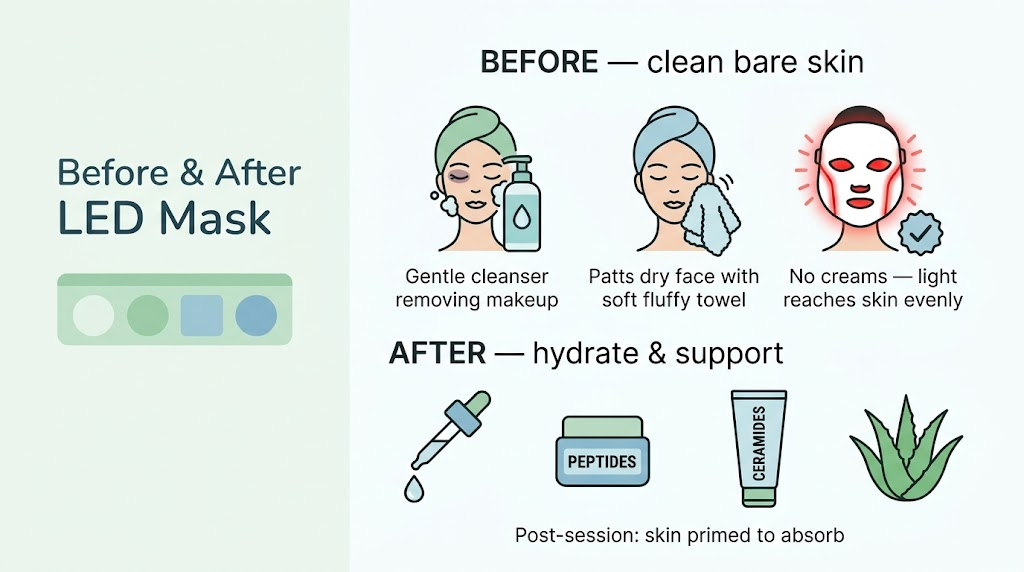
Table of Contents
- 1. How a Red Light Therapy Mask Works
- 2. What to Put on Your Face Before Treatment
- 3. Step-by-Step Pre-Treatment Prep
- 4. What to Apply After Red Light Therapy
- 5. Choosing a Quality Red Light Therapy Mask
- 6. Tips to Get the Most From Your Routine
- 7. Frequently Asked Questions
- 8. Partner With Rainbow Technology
- 9. References
1. How a Red Light Therapy Mask Works
A red light therapy mask is a wearable LED device designed to deliver specific light wavelengths directly to the skin. Most modern masks combine red light (typically 630–660 nm) and near-infrared light (typically 810–850 nm) — wavelengths widely used in cosmetic LED treatments.
These wavelengths work through photobiomodulation: light is absorbed by mitochondria in skin cells, boosting ATP production, which supports repair and collagen activity[1]. Commonly associated benefits include:
- Supporting collagen activity
- Improving skin appearance and texture
- Enhancing overall skin vitality
- Helping the skin look smoother and more refreshed
2. What to Put on Your Face Before Treatment
The simple answer: start with clean, bare skin. Most LED device guidelines recommend avoiding skincare products before treatment. A freshly cleansed face lets light reach the skin more evenly, without interference from product layers.
Here’s why minimal preparation works best:
- 1. Better light exposure: Heavy creams, oils, sunscreen, or makeup may scatter or absorb light before it reaches the skin surface — reducing the dose your cells actually receive.
- 2. Lower risk of sensitivity: Ingredients such as retinoids, AHAs, BHAs, or strong essential oils can increase skin sensitivity, especially when combined with light exposure.
- 3. More consistent results: A simple pre-treatment routine makes it easier to maintain consistency across sessions — and consistency is what drives results[2].
3. Step-by-Step Pre-Treatment Prep
- Step 1 — Remove makeup and sunscreen: Use a gentle cleanser to remove dirt, oil, and cosmetic residue. If you wear heavy makeup, consider double cleansing.
- Step 2 — Cleanse thoroughly: Choose a mild, non-exfoliating cleanser. Avoid harsh scrubs before treatment.
- Step 3 — Pat skin dry: Dry your face with a clean towel. Excess moisture isn’t necessary before using a red light therapy mask.
- Step 4 — Skip pre-treatment products: Avoid serums, oils, and moisturizers before your session unless your device manufacturer specifically recommends otherwise.
- Step 5 — Protect your eyes: Use built-in eye protection or approved protective eyewear during treatment. See our eye safety guide.
Wondering whether to wash your face after the session? The answer depends on what you used — see our wash-after guide for the full breakdown.
4. What to Apply After Red Light Therapy
While pre-treatment skincare should stay minimal, post-treatment is a great time to support hydration and barrier care. Blood flow to the skin is elevated after a session, making it primed for absorption. Commonly used ingredients include:
- Hyaluronic acid for hydration
- Peptides to support skin structure
- Ceramides to reinforce the skin barrier
- Aloe vera or green tea extract for soothing care
- Vitamin C (if your skin tolerates it well)
Try to avoid strong exfoliants or high-strength retinoids immediately after treatment, especially if your skin feels sensitive. For the retinol timing question specifically, see our red light + retinol guide.
5. Choosing a Quality Red Light Therapy Mask
Not all LED devices are designed the same way. When evaluating a mask, consider wavelength range, comfort, irradiance, and safety certifications[3].
- Wavelength precision: Verified 630–660 nm red and 810–850 nm NIR channels — checked by spectrometer per batch, not just claimed on a sticker.
- Comfort & fit: Flexible silicone structures that contour to the face so the light stays close and consistent.
- Safety & compliance: IEC 62471 photobiological safety, CE/RoHS/FCC/KC certificates, ISO 13485 + MDSAP QMS, FDA registration compliance documentation.
Our buyer’s checklist walks through each spec in detail.
6. Tips to Get the Most From Your Routine
- Use consistently — many users follow a schedule of 2–3 sessions per week.
- Start with shorter sessions and increase gradually.
- Always begin with a clean face.
- Follow with hydrating skincare after treatment.
- Wear daily sunscreen to protect overall skin health.
7. Frequently Asked Questions
Q: Can I use red light therapy on my neck or chest?
A: Yes. Many LED masks and panels are used on areas beyond the face, including the neck and décolletage.
Q: Is it okay to wear moisturizer before using an LED mask?
A: Most guidelines suggest using the mask on bare skin unless otherwise instructed by the device manufacturer. Moisturizer is best applied after the session.
Q: When will I notice visible changes?
A: Results vary between individuals, but some users report improvements in skin texture and appearance after several weeks of consistent use — and clinical trials show measurable collagen changes in the 10–12 week range[2]. See our results timeline guide for the details.
8. Partner With Rainbow Technology
Clean skin gets you halfway — the device delivers the other half. At Rainbow, we build masks that make your routine worth it:
- Multi-wavelength LED combinations: Verified 630–660 nm red, 415 nm blue, and 810–850 nm NIR channels, engineered to match published research parameters.
- Lightweight, flexible silicone: Contours to the face for consistent contact and irradiance.
- Adjustable settings & portable options: Wireless, rechargeable designs for daily convenience.
- OEM/ODM customization for brands: From concept to certification. Consult our engineering team; reference designs on our product lineup page.
Request your custom quote today.
9. References
[1] Hamblin MR.
Mechanisms and applications of the anti-inflammatory effects of photobiomodulation. AIMS Biophysics. 2017;4(3):337-361.
[2] Wunsch A, Matuschka K.
A controlled trial to determine the efficacy of red and near-infrared light treatment in patient satisfaction, reduction of fine lines, wrinkles, skin roughness, and intradermal collagen density increase. Photomedicine and Laser Surgery. 2014;32(2):93-100.
[3] Jagdeo J, Austin E, Mamalis A, et al.
Light-emitting diodes in dermatology: a systematic review of randomized controlled trials. Lasers in Surgery and Medicine. 2018;50(6):613-628.

