
Benefits of Red Light Therapy for Skin: Unlocking Radiant, Youthful Skin Naturally
Benefits of Red Light Therapy for Skin: Unlocking Radiant, Youthful Skin Naturally
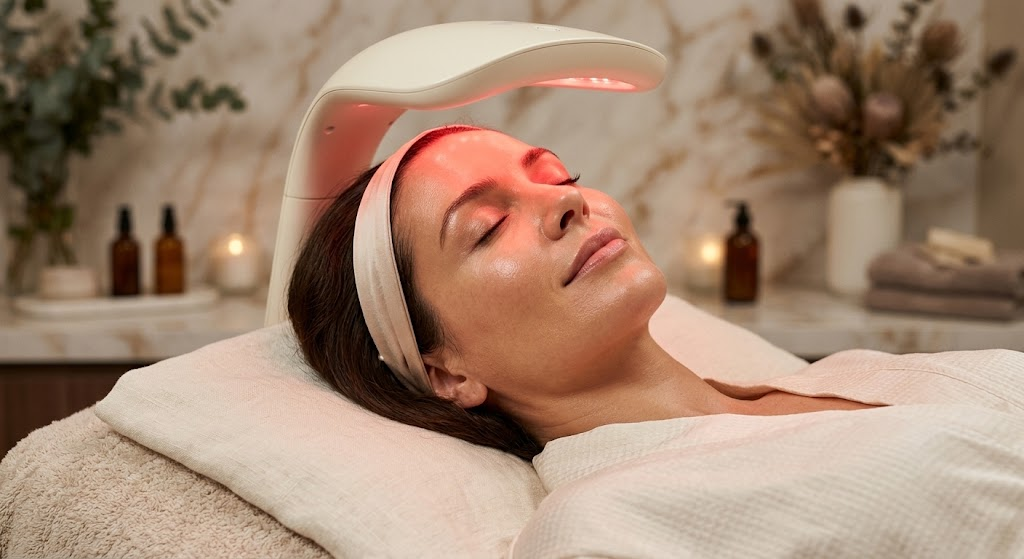
Red light therapy (RLT) delivers five clinically supported benefits for skin: collagen production (a 2023 RCT measured ~30% wrinkle volume reduction after 10 sessions[1]), reduced inflammation for acne and redness[2], accelerated healing and scar reduction[4], faded pigmentation, and overall radiance. For best results, use 3–5 times per week, 10–20 minutes per session, and expect visible change after 8–12 weeks of consistency[3].
Table of Contents
- 1. What Is Red Light Therapy and How Does It Work?
- 2. Key Benefits of Red Light Therapy for Skin
- 3. What Does the Clinical Evidence Show?
- 4. How to Use RLT for Best Results
- 5. Safety & Skin Type Considerations
- 6. Choosing a Quality Device: What Actually Determines Results
- 7. Partner With Rainbow Technology for Custom LED Devices
- 8. References & External Links
1. What Is Red Light Therapy and How Does It Work?
Red light therapy (RLT) — also called photobiomodulation (PBM) or low-level light therapy — uses specific wavelengths of red (600–700 nm) and near-infrared (700–850 nm) light to penetrate the skin’s layers and trigger beneficial cellular responses[3]. The core mechanism is elegant: photons are absorbed by cytochrome c oxidase in the mitochondria, restoring cellular respiration and increasing ATP production — the energy currency of cells[3].
With more cellular energy, skin accelerates three processes that matter most:
- Cellular Repair & Regeneration: Energy-boosted cells replace damaged tissue faster, supporting everything from daily environmental recovery to wound healing[4].
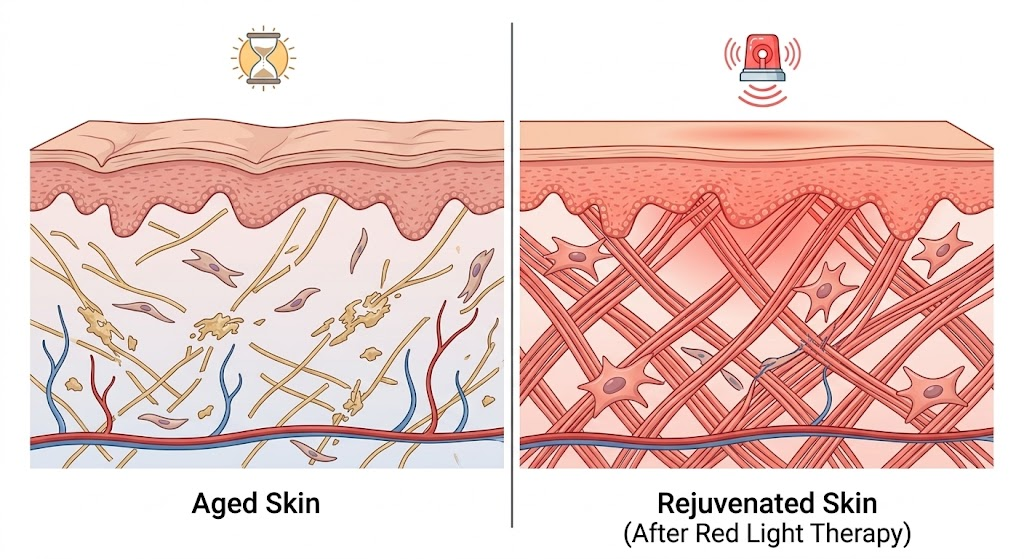
- Collagen & Elastin Synthesis: Stimulated fibroblasts produce more structural proteins, firming skin and smoothing fine lines[1].
- Inflammation Modulation: PBM reduces pro-inflammatory cytokines, calming redness and supporting an even complexion[2].
2. Key Benefits of Red Light Therapy for Skin
The benefits of red light therapy for skin go far beyond surface-level improvements. Here is what the treatment does — and the evidence behind each claim:
| Benefit | How It Works | Evidence Snapshot |
|---|---|---|
| Boosts Collagen Production | Stimulates fibroblast activity, increasing collagen and elastin synthesis for firmer, plumper skin | ≈30% wrinkle volume reduction after 10 sessions of red PBM (RCT, n = 137)[1] |
| Reduces Inflammation & Calms Skin | Modulates inflammatory signaling, reducing pro-inflammatory cytokines linked to acne, rosacea, and redness | Grade B recommendation for acne vulgaris in a 31-RCT systematic review[2] |
| Accelerates Healing & Scar Reduction | Enhances blood circulation and tissue regeneration; promotes collagen in damaged skin | Acute wound healing supported at Grade B in the same systematic review[2] |
| Fades Sun Spots & Hyperpigmentation | Supports cellular repair and a more even melanin distribution — a gentler alternative to harsh chemical lighteners | Clinical reviews report improvement in photoaging and even tone with LED therapy[4] |
| Improves Overall Radiance | Boosts cellular energy and oxygenation, supporting natural skin rejuvenation and resilience | ATP-driven repair and redox signaling documented in PBM mechanism reviews[3] |
3. What Does the Clinical Evidence Show?
The benefits of red light therapy for skin are not marketing claims — they are measured outcomes:
- Wrinkle Reduction: A 2023 randomized controlled trial of 137 women found that 10 sessions of red (660 nm) photobiomodulation reduced periocular wrinkle volume by approximately 30%, with significant improvements in skin-related quality of life[1].
- Acne & Healing: A systematic review of 31 randomized controlled trials gave LED therapy a Grade B recommendation for acne vulgaris and acute wound healing, concluding that LEDs safely alter skin biology with few adverse events[2].
- Broad Clinical Use: Clinical reviews spanning two decades document LED benefits for wound healing, sunburn prevention, phototherapy for facial rhytides, and skin rejuvenation[4].
One important nuance: results depend on dose, wavelength, and irradiance. Studies using sub-optimal parameters tend to show weaker effects — the therapy works, but only when the device delivers the right optical dose[2]. This is why device engineering matters as much as the treatment itself. For a deeper look at the underlying photobiology, see our guide to the science behind red light therapy wavelengths.
4. How to Use RLT for Best Results
Consistency beats intensity. Tailor your protocol to your primary skin concern:
| Skin Goal | Frequency | Session Length | Time to Visible Results |
|---|---|---|---|
| Anti-Aging & Collagen | 3–5 times / week | 10–20 minutes | 4–12 weeks of consistent use[1] |
| Acne & Inflammation | 3–5 times / week | 10–15 minutes | 4–8 weeks[2] |
| Wound Healing & Scars | 4–7 times / week | 10–20 minutes | Ongoing; accelerated repair[4] |
- Cleanse First: Remove makeup, oils, and sunscreen — they reflect photons away from the skin. See our guide on what to put on your face before red light therapy.
- Keep Skin Bare & Dry: Apply RLT to clean, dry skin for maximum photon delivery.
- Protect Your Eyes: Always wear the included eye shields or goggles with high-output devices.
- Pair With Skincare: RLT complements serums and moisturizers — light first, actives after. Avoid pairing with photosensitizing ingredients without professional guidance.
- Combine With Professional Treatments: RLT enhances results when combined with facials or gentle exfoliation — and for frequency guidance, see how often to use a red light mask.
5. Safety & Skin Type Considerations
Red light therapy is generally safe and well tolerated across all skin types — including sensitive skin — because it emits no UV and minimal heat. Across 31 clinical trials, adverse events were mild and transient (temporary redness, dryness, or mild stinging), with no severe events reported[2]. Still, take these precautions:
- Consult a Professional: If you have a photosensitive condition, are pregnant or nursing, or take photosensitizing medications.
- Patch Test: Test on a small skin area before your first full session.
- Don’t Overdo It: PBM follows a biphasic dose-response curve — more time is not better, and overexposure can reduce benefits[3].
- Use Sunscreen Daily: Protect the collagen you are building from UV damage.
6. Choosing a Quality Device: What Actually Determines Results
The clinical evidence is clear that RLT works — when the device delivers the right optical parameters. Before buying, verify three specifications:
- Wavelength Accuracy: Clinically validated bands are 630–670 nm (red) and 810–850 nm (near-infrared). Look for narrow bandwidth (±5–10 nm) rather than broad-spectrum drift[3].
- Irradiance (Power Density): Measured in mW/cm² at the skin surface — not total wattage. Meaningful devices typically deliver 30–100 mW/cm² at treatment distance.
- Certifications: Look for IEC 62471 (optical safety), CE / IEC 60601 (electrical safety), and ISO 13485 (quality management) — the same standards reputable manufacturers build to[5].
Wondering whether a mask or panel fits your goals — or your budget? Compare mask vs. panel cost and margin, and read whether red light therapy masks actually work in our companion review.
7. Partner With Rainbow Technology for Custom LED Devices
The science only delivers results when the engineering does. Rainbow Technology provides end-to-end ODM/OEM manufacturing from our Shenzhen facility — from optical spectrum design to certified, production-ready devices:
- Full ISO 13485, CE, and FDA medical device compliance documentation[5].
- Custom optical spectrum engineering (630 nm, 660 nm, 810 nm, 830 nm, 850 nm) with precise irradiance control — the parameters that decide whether results match the clinical trials.
- Flexible sample testing & small-batch production (500 to 1,000 units) for brand launches.
Looking for high-performance, custom-built LED light therapy devices? Visit our OEM/ODM Manufacturing Page or request your custom quote today.

