
Does Red Light Therapy Actually Work? The Clinical Evidence & Hardware Physics Behind Photobiomodulation
Position 0 Summary Yes—red light therapy works, provided the device delivers sufficient optical energy. Controlled trials show clinical doses raise intradermal collagen density by ~45% (Wunsch 2014) and type-I procollagen by 31% with 18% lower MMP-1 (Barolet 2009). The mechanism: targeted 630–660 nm red and 810–850 nm near-infrared photons are absorbed by mitochondrial cytochrome c oxidase, displacing inhibitory nitric oxide, boosting ATP synthesis (15–20% measured gains), and triggering pro-collagen gene expression. Sub-therapeutic devices (under ~5 mW/cm²) fail to reach the biological threshold—hardware physics, not the science, is why most “it doesn’t work” cases fail.
Red light therapy (RLT) has transitioned from NASA space-plant research to a staple in clinical dermatology and home wellness. However, with consumer markets flooded by cheap LED masks and panels, skepticism remains high: Is red light therapy backed by real science, or is it just high-priced ambient lighting? The short answer is yes—red light therapy actually works, provided the emitted photons deliver sufficient energy to trigger cellular photobiomodulation (PBM).
Table of Contents
- The Science: How Photobiomodulation Works at the Cellular Level
- Hardware Physics: Why Some Devices Work and Others Fail
- Frequently Asked Questions (FAQ)
- Consult with an ISO 13485 Light Therapy Engineering Team
1. The Science: How Photobiomodulation Works at the Cellular Level
Photobiomodulation (PBM) is not a thermal or chemical reaction; it is a photo-biochemical process similar to photosynthesis in plants. Dermal cells absorb specific light wavelengths and convert photon energy into biological cellular fuel.
Key principle: Red light therapy triggers biological cellular work by delivering non-thermal light photons to mitochondrial photoreceptors, increasing intracellular ATP production, stimulating collagen cross-linking, and downregulating localized inflammatory signaling.
![Mitochondrial electron transport chain activating intracellular ATP energy synthesis — 1:1 WebP illustration placeholder: stylized mitochondrion with glowing cytochrome c oxidase complex and ATP synthase] (replace with final artwork)
Mitochondrial Cytochrome c Oxidase & The ATP Energy Surge
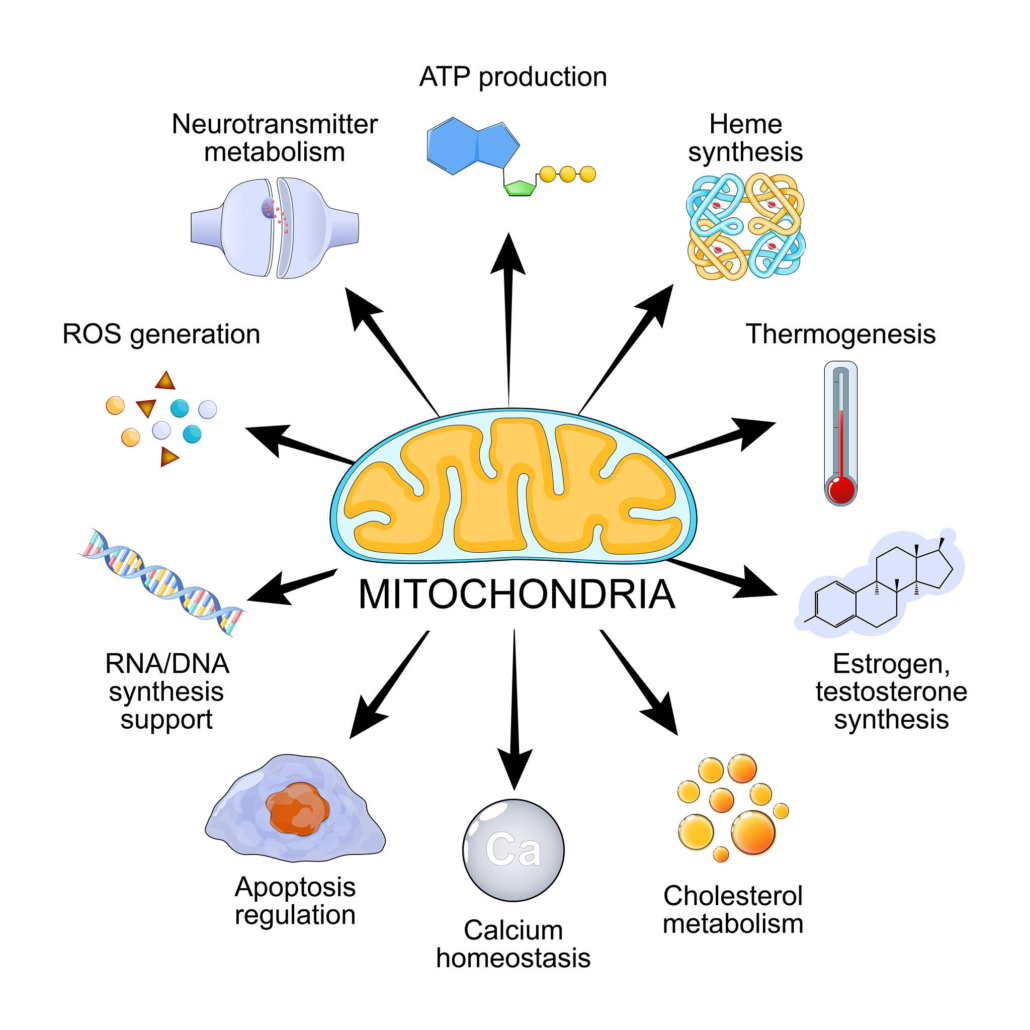
When light in the 630–660 nm red and 810–850 nm near-infrared (NIR) spectrum reaches dermal layers, it is absorbed by Cytochrome c Oxidase (CCO)—the key enzyme in Unit IV of the mitochondrial respiratory chain. In aging or damaged cells, CCO is often blocked by inhibitory Nitric Oxide (NO). Photons displace NO, restoring oxygen flow and surging Adenosine Triphosphate (ATP) production.
Evidence note: Controlled cell studies (e.g., Nature Scientific Reports 2017) measure ATP increases of roughly 15–20% at 660/810 nm and 3 J/cm²—a modest but reproducible gain that fuels collagen synthesis. Be wary of marketing claims of “150% ATP increases”; no peer-reviewed source supports that figure.
Neocollagenesis & Anti-Inflammatory Cytokine Pathways
With abundant ATP, dermal fibroblasts upregulate Transforming Growth Factor-beta (TGF-β) signaling pathways. This signals the cell nucleus to synthesize precursor pro-collagen, which cross-links into dense Type I and Type III collagen networks over an 8-to-12-week cycle. Simultaneously, PBM downregulates pro-inflammatory cytokines (such as TNF-α and IL-1$\beta$), accelerating tissue repair and reducing vascular redness.
Clinical benchmark: Wunsch & Matuschka (2014) measured ~45% ultrasound collagen-density gain in a 136-subject RCT; Barolet et al. (2009) reported +31% type-I procollagen and −18% MMP-1. Home-use masks at lower fluence typically deliver more moderate 20–30% gains.
2. Hardware Physics: Why Some Devices Work and Others Fail
When red light therapy fails to produce clinical results, the cause is rarely the science of photobiomodulation itself—it is insufficient hardware engineering. Without precise optical irradiance and narrow spectral output, light photons cannot penetrate the dermis or meet the biological activation threshold.
Factory-grade benchmark: Clinical efficacy requires an optical irradiance of 30–50 mW/cm² at target skin distance, narrow spectral tolerance within ±3–5 nm, and total session energy density (fluence) of 18–30 J/cm².
| Engineering & Technical Metric | Low-Grade Consumer Device ($15–$40) | Commercial / Medical-Grade Device ($150+) |
|---|---|---|
| Peak Wavelength Precision | ±15 to ±25 nm (Unsorted LED chips) | ±3 to ±5 nm (Precision-binned LED wafer) |
| Dermal Irradiance Output | <5 mW/cm2 (Sub-therapeutic threshold) | 30–50 mW/cm2 (Optimal PBM activation) |
| Session Energy Fluence (10 Min) | <3 J/cm2 (Fails to activate CCO) | 18–30 J/cm2 (Clinical therapeutic window) |
| Thermal PCB Management | Unregulated heat (Thermal degradation) | Constant-Current Sink (<40∘C operating cap) |
| Manufacturing Standard | General commercial assembly | ISO 13485 Cleanroom Medical Device Facility |
![Integrating sphere spectroradiometer validating peak wavelength precision and radiant flux — 1:1 WebP illustration placeholder] (replace with final artwork)
📁 B2B Engineering Resource Developing a Clinical-Grade Red Light Device Line? Download our technical whitepaper: 2026 Photobiomodulation Device Engineering & Regulatory Guide. Includes integrating-sphere spectroradiometer lab reports, constant-current PCB design files, and FDA 510(k) Class II submission frameworks. 📥 Download Free Engineering Whitepaper (PDF) — available on request from our engineering team
Irradiance & The Arndt-Schulz Law of Photobiology
The Arndt-Schulz Law dictates that living tissue requires a minimum threshold of optical energy to induce a positive biological response. If irradiance is too weak (<5 mW/cm2 for masks), minimal mitochondrial stimulation occurs. Conversely, excessive heat—not irradiance itself—is the danger: the facial therapeutic irradiance window extends to roughly 200 mW/cm² (100–150 mW/cm² at 6 inches is standard for commercial/clinical panels), but when surface temperature rises above ~40 °C, heat stress upregulates Matrix Metalloproteinase-1 (MMP-1), an enzyme that breaks down existing collagen fibers. Thermal management, not raw power, is what separates clinical devices from cheap ones.
Thermal note: PBM is non-thermal by design—a typical session raises skin surface temperature only 1–3 °C. The MMP-1 risk appears when constant-current regulation fails and LEDs overheat the device surface (e.g., unregulated cheap masks), not from high irradiance delivered within the safe window.
Spectral Binning & Thermal Management
Commercial-grade LED devices utilize narrow-band LED wafers. Low-cost manufacturers often use wide-tolerance LED chips that drift out of the optimal 630 nm or 850 nm absorption spectrum. Furthermore, improper current regulation turns light energy into heat rather than optical flux, nullifying therapeutic benefits.
3. Frequently Asked Questions (FAQ)
Q1: How long does it take to see visible results from red light therapy? A: Microvascular circulation and subtle skin radiance improvements occur within 1 to 2 weeks. However, true neocollagenesis and structural wrinkle reduction require 8 to 12 weeks of consistent treatment (10 to 15 minutes per session, 3 to 5 times weekly). Gains are cumulative and begin to decline 8–12 weeks after stopping; a maintenance schedule of 1–2 sessions weekly preserves roughly 75–85% of peak results.
Q2: Is red light therapy safe for long-term daily use? A: Yes. Red and near-infrared light therapy uses non-ionizing, non-thermal light that contains zero ultraviolet (UV) radiation. Devices certified under IEC 62471 for photobiological eye safety carry an RG0 (Exempt) or RG1 (Low Risk) classification at the intended treatment distance and can be used daily without damaging skin or ocular tissue—provided the manufacturer’s session-duration guidance is followed (the biphasic dose-response curve means more is not better beyond ~20 minutes).
Q3: Why do some people claim red light therapy does not work for them? A: Ineffectiveness is almost always caused by using sub-therapeutic hardware (low-power devices delivering under ~5 mW/cm²), inconsistent application, or applying opaque skincare products (like mineral sunscreens or heavy oils) that reflect light photons—reducing red/NIR transmission by roughly 30–50%, and up to 60–80% for thick, pigment-loaded formulas—before they reach the dermis.
4. Consult with an ISO 13485 Light Therapy Engineering Team
Shenzhen Rainbow Technology Co., Ltd. (Rainbowdo) is an ISO 13485-certified OEM/ODM manufacturer specializing in medical-grade LED beauty panels, wearable 3D silicone light masks, and high-irradiance photobiomodulation devices.
- Precision Optical Engineering: Multi-wavelength arrays (630 nm / 660 nm / 810–850 nm) with strict ±3 nm spectral binning and per-channel spectroradiometer verification.
- Complete Regulatory Clearances: Full technical files supporting FDA 510(k), CE MDR compliance, IEC 62471 eye safety, and ISO 10993 biocompatibility testing.
- Medical Cleanroom Production: Automated SMT production and platinum-cured medical-grade silicone molding facilities.
👉 Request Factory Regulatory Compliance Package & Engineering OEM Quote | ✉️ Direct Email: rainbow25@rainbowdo.com | 🌐 rainbowdo.com
Academic & Industry References
- Avci, P., et al. (2013). Low-Level Laser (Light) Therapy (LLLT) in Skin: Stimulating, Healing, Restoring. Seminars in Cutaneous Medicine and Surgery, 32(1), 41–52. PMID: 24049929.
- Wunsch, A., & Matuschka, K. (2014). A Controlled Trial to Determine the Efficacy of Red and Near-Infrared Light Treatment in Skin Roughness and Intradermal Collagen Density Increase. Photomedicine and Laser Surgery, 32(2), 93–100. PMID: 24286286.
- Barolet, D., Roberge, C. J., Auger, F. A., Boucher, A., & Germain, L. (2009). Regulation of Skin Collagen Metabolism In Vitro Using a Pulsed 660 nm LED Light Source: Clinical Correlation with a Single-Blinded Study. Journal of Investigative Dermatology, 129(12), 2751–2759. DOI: 10.1038/jid.2009.186. PMID: 19587693.
- Hamblin, M. R. (2017). Mechanisms and Applications of the Anti-Inflammatory Effects of Photobiomodulation. AIMS Biophysics, 4(3), 337–361. DOI: 10.3934/biophy.2017.3.337. PMID: 28748217.
- Wang, Y., et al. (2017). Photobiomodulation of human adipose-derived stem cells using 660 nm and 810 nm diodes. Scientific Reports, 7, 12548. (ATP +15–20% measured at 3 J/cm².)
- Huang, Y.-Y., et al. (2009). Biphasic dose response in low level light therapy. Dose-Response, 7(4), 358–383.
- International Electrotechnical Commission. (2006). IEC 62471: Photobiological Safety of Lamps and Lamp Systems. Geneva: IEC.
- U.S. Food and Drug Administration. (2023). Photobiomodulation (PBM) Devices — Premarket Notification [510(k)] Submissions (Draft Guidance, Docket FDA-2022-D-3116).
This article is for informational purposes only and does not constitute medical advice. Red light therapy devices discussed herein are not cleared by the FDA to diagnose, treat, cure, or prevent any disease.

