
What Does Blue Light Therapy Do for Skin?

30-Second Summary:
Blue light therapy treats skin through two distinct paths: at-home blue LED devices (415–420 nm) that kill acne-causing bacteria — reducing inflammatory lesions by 59–67% in 8 sessions[1] — and clinical photodynamic therapy (PDT) using a photosensitizing agent plus blue light to clear precancerous actinic keratoses[5]. Both are non-invasive and require sun protection afterward.
Table of Contents
- 1. What Does Blue Light Therapy Do for Skin?
- 2. Two Treatment Paths: Blue LED vs. Clinical PDT
- 3. Benefits of Blue Light for Skin
- 4. What to Expect During Treatment
- 5. Post-Treatment Care & Maintenance
- 6. Safety & Who Should Consider It
- 7. Partner With Rainbow Technology for Custom LED Devices
- 8. References & External Links
1. What Does Blue Light Therapy Do for Skin?
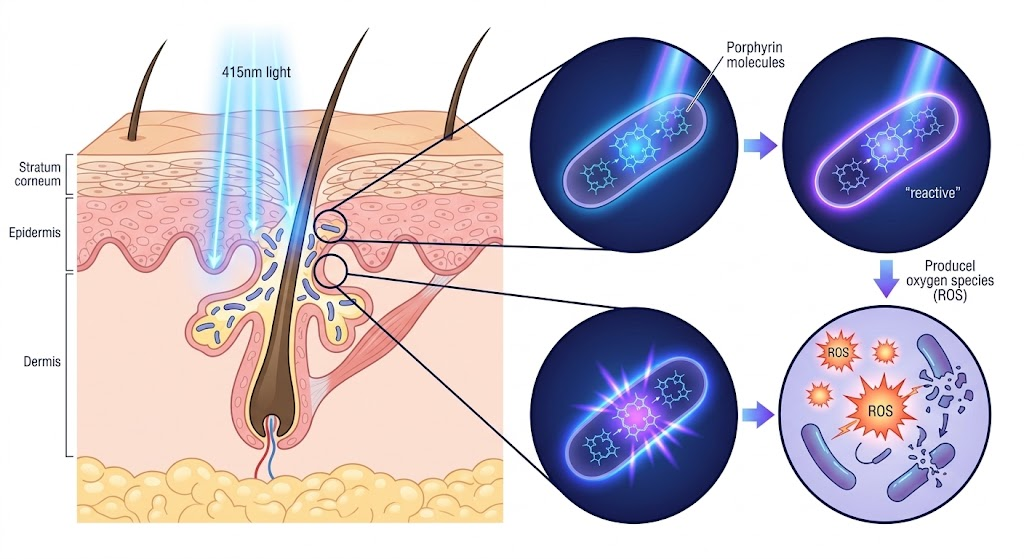
Blue light therapy uses narrow-band light in the 405–420 nm range to treat skin conditions through photobiomodulation and photodynamic mechanisms[3]. Its best-documented effects:
- Kills acne-causing bacteria: Blue light is absorbed by porphyrins produced naturally by Cutibacterium acnes, triggering reactive oxygen species that destroy the bacteria without UV exposure[1].
- Calms inflammation: Blue light modulates inflammatory signaling in skin tissue[3].
- Destroys precancerous cells: In clinical photodynamic therapy, a photosensitizing agent plus blue light selectively clears actinic keratoses and sun-damaged cells[5].
2. Two Treatment Paths: Blue LED vs. Clinical PDT
“Blue light therapy” is often used loosely — but it covers two very different treatments. Understanding the distinction helps you choose the right one:
| Blue LED Light Therapy | Photodynamic Therapy (PDT) | |
|---|---|---|
| Photosensitizer | None — relies on natural bacterial porphyrins | Topical ALA applied before light exposure[5] |
| Primary Use | Mild-to-moderate acne, at home or in clinic[2] | Actinic keratoses and field cancerization, physician-administered[5] |
| Session | 8–15 minutes, 2× weekly for ~4 weeks[1] | Incubation (1–18 h) + ~16–17 min illumination[5] |
| Recovery | No downtime; mild transient redness possible | Days of erythema, peeling, and strict sun avoidance[5] |
3. Benefits of Blue Light for Skin
| Benefit | How It Works | Evidence |
|---|---|---|
| Acne Reduction | Photodestroys Cutibacterium acnes via porphyrin activation; reduces pimples, cysts, and blackheads | 59–67% reduction in inflammatory lesions after 8 sessions[1]; systematic review support[2] |
| Precancerous Lesion Clearance | ALA-PDT selectively destroys dysplastic keratinocytes in actinic keratoses | FDA-approved; 77% complete response at Week 8 in Phase 3 trial[5] |
| Improved Texture & Tone | Secondary photorejuvenation effect; minimizes fine lines and pore size | Documented as a secondary effect of PDT[5] |
| Rosacea & Inflammation | Modulates inflammatory signaling in the skin | Anti-inflammatory effects noted in LED dermatology reviews[3] |
| Minimal Downtime | UV-free; mild transient redness or peeling only | No adverse effects reported across acne phototherapy trials[1] |
4. What to Expect During Treatment
- Blue LED acne sessions: The skin is cleansed, then exposed to blue light for 8–15 minutes. A mild warming or tingling sensation is common; the procedure is generally painless. Typical protocols run twice weekly for ~4 weeks[1].
- PDT sessions: A photosensitizing agent (ALA) is applied and incubated — from about 1 hour (short-contact) to 18 hours — followed by blue light illumination of ~16 minutes. Stinging or burning during illumination is possible but resolves quickly[5].
- Multiple sessions: For both paths, several sessions spaced weeks apart are usually needed for optimal, durable results[2].
5. Post-Treatment Care & Maintenance
- Sun protection: Use broad-spectrum sunscreen daily — especially after PDT, when skin is temporarily photosensitive[5].
- Gentle skincare: Choose mild cleansers and moisturizers; avoid exfoliants and actives until skin recovers.
- Expect transient reactions: Redness, peeling, or sensitivity typically resolve within a week[5].
- Maintain results: Consistency and follow-up sessions sustain outcomes over time[2].
6. Safety & Who Should Consider It
Blue light therapy is generally well tolerated, with only mild, transient adverse events reported across clinical trials[1][3]. Key considerations:
- Eye protection: Wear protective goggles during treatment — blue light is high-energy visible light.
- Consult a dermatologist: For PDT, acne that does not respond to OTC options, or any suspicious or changing lesions.
- Choose certified devices: Look for IEC 62471 optical safety, CE / IEC 60601 electrical safety, and ISO 13485 quality systems[6].
- Not a substitute: Blue light reduces bacteria and inflammation but does not replace sunscreen, retinoids, or professional skin cancer screening.
Want the full picture on light-based skincare? See our guides on whether red light therapy masks work and red light therapy benefits for skin.
7. Partner With Rainbow Technology for Custom LED Devices
Whether you are launching a skincare brand or expanding a professional device line, the science only works when the engineering does. Rainbow Technology delivers end-to-end ODM/OEM manufacturing from our Shenzhen facility — including blue (415 nm) and multi-wavelength LED devices — from optical spectrum design to certified production:
- Full ISO 13485, CE, and FDA medical device compliance documentation[6].
- Custom optical spectrum engineering (415 nm blue, 630 nm, 660 nm, 810 nm, 830 nm, 850 nm) with precise irradiance control — the parameters that decide whether results match clinical trials.
- Flexible sample testing & small-batch production (500 to 1,000 units) for brand launches.
Looking for high-performance, custom-built LED light therapy devices? Visit our OEM/ODM Manufacturing Page or request your custom quote today.

